Affiliate Disclosure: MyHomeGymPro.com is reader-supported. When you buy through links on our site, we may earn an affiliate commission at no extra cost to you.
You’ve been running a solid barbell program for a while now. Squats, bench, overhead press — the big lifts are covered. But every time you want to hit lats, triceps, or rear delts with cables, you’re either rigging up bands or driving fifteen minutes to the commercial gym. That gets old fast when your garage already has a rack sitting right there. A power rack with pulley system solves this by collapsing your barbell station and cable station into one footprint — no second trip, no wasted floor space.
Quick Answer
A power rack with pulley system combines a heavy-duty squat cage with integrated high and low cable pulleys, letting you squat, bench, do lat pulldowns, cable rows, and dozens of isolation movements without leaving one station. Our top pick is the Pooboo Multi-Functional Machine Power Cage, 2000LB Squat Rack — it packs a 2,000 lb weight capacity, dual pulley columns, and a surprisingly complete attachment set at a price that undercuts most competitors. If you want a guided bar path and built-in weight stacks for faster transitions, the DONOW Smith Machine with Weight Stacks is a strong runner-up.
TL;DR
The Pooboo Power Cage gives you the most training versatility per square foot with free-motion cables and a serious weight rating. The DONOW Smith Machine trades some free-weight freedom for safer solo lifting and quicker weight changes. Either way, you get a legitimate cable station built right into your rack.
Key Takeaways
- A power rack with pulley system replaces two or three machines in your home gym, saving money and floor space.
- Look for at least a 1,000 lb weight capacity if you plan to squat and bench heavy.
- Dual pulley columns (high and low) unlock the most exercise variety — lat pulldowns, cable crossovers, rows, curls, and more.
- Built-in weight stacks speed up transitions but limit max resistance compared to plate-loaded pulleys.
- Ceiling height matters more than you think — measure before you buy.
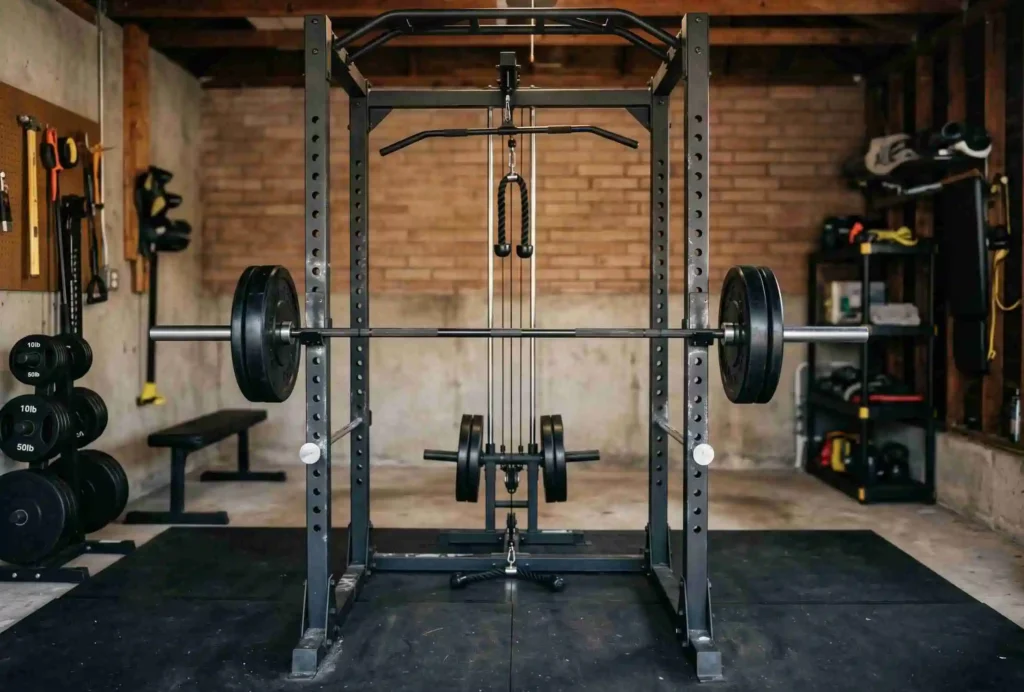
Table of Contents
What to Look For in a Power Rack with Pulley System
Weight Capacity
The rack needs to handle your heaviest squat plus a safety margin. Look for at least 1,000 lbs for recreational lifters — if you’re pushing 400+ lb squats, aim for 1,500 lbs or higher.
Pulley Configuration
A single high pulley gives you pulldowns and pushdowns. Dual high-and-low pulleys open up rows, curls, face pulls, and crossovers. Check the pulley ratio too — a 2:1 ratio halves the effective resistance.
Steel Gauge and Construction
Quality racks use 11-gauge or 12-gauge steel uprights. Thicker gauge means less flex under heavy loads. Check bolt quality, gusset plates, and weld consistency as well.
Hole Spacing and Compatibility
Westside hole spacing (1-inch increments through the bench zone) lets you dial in bar height precisely. Confirm the hole size — 5/8-inch and 1-inch are common — so aftermarket attachments fit.
Attachment Ecosystem
The best power racks with pulley systems come with dip handles, landmine posts, band pegs, and pull-up bars. Check whether the manufacturer sells compatible add-ons. A rack you can grow with beats one you outgrow in six months.
Footprint and Height
Many combo racks run 50–60 inches wide and 48–55 inches deep, but cable arms can push total depth past 70 inches. Ceiling height is critical — a 7-foot rack in a 7.5-foot room leaves no room for pull-ups.
Common Mistakes When Buying a Power Rack with Pulley System
- Ignoring ceiling height. The fix: Measure floor-to-ceiling before ordering. Subtract at least 6 inches for overhead clearance, more if you want to do pull-ups on top.
- Chasing the cheapest option. The fix: A flimsy rack flexes under load and wears out fast. Spend a little more for 11-gauge steel and a capacity above 1,000 lbs.
- Forgetting about plate storage. The fix: Look for racks with built-in plate horns or budget for a separate tree. Plates scattered across the floor are a tripping hazard.
- Skipping the pulley ratio check. The fix: Ask whether the cables use a 1:1 or 2:1 ratio. A 2:1 ratio means loading 100 lbs only gives you 50 lbs of effective resistance.
- Assuming all accessories are included. The fix: Read the product listing carefully. Some racks advertise lat pulldown capability but ship without the bar, seat pad, or low-row attachment.
- Not reinforcing the floor. The fix: Use 3/4-inch rubber stall mats under and around the rack. They protect your floor and keep the rack from shifting during heavy sets.
Our Top Picks
Best Overall: Pooboo Multi-Functional Machine Power Cage
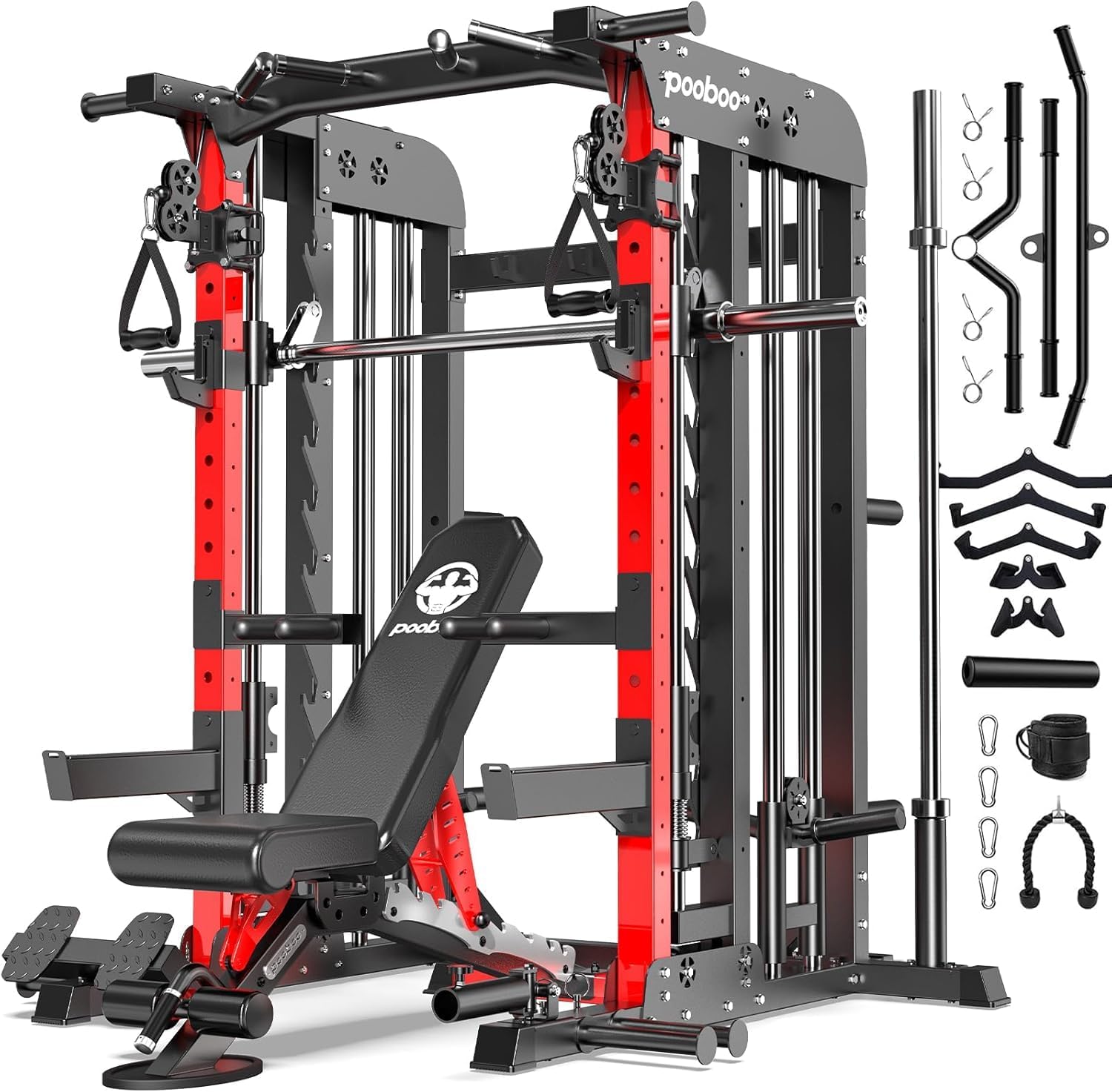
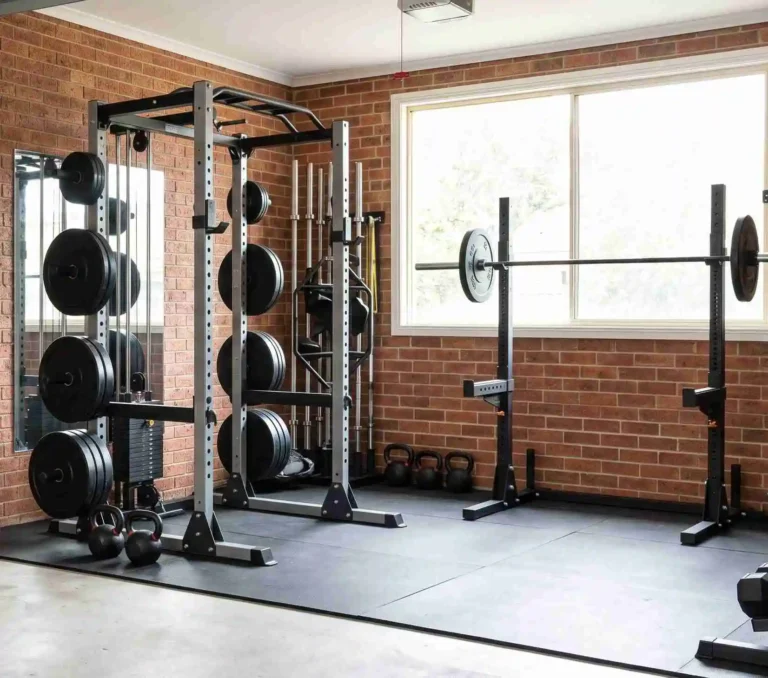
The Pooboo Multi-Functional Machine Power Cage, 2000LB Squat Rack is the rack that makes cable machines optional in a home gym. With a rated capacity of 2,000 lbs, heavy-gauge steel construction, and integrated high-and-low pulley columns on both sides, it handles everything from heavy squats to lat pulldowns to cable crossovers. You also get a pull-up bar, dip handles, and J-hooks out of the box. It’s ideal for intermediate to advanced lifters who want barbell and cable training in a single station. The build quality punches above its price point, and the dual cable columns deliver smooth, consistent resistance. On the downside, assembly is a solid 3-hour project and the footprint is substantial — make sure you’ve got the space. The included instruction manual could be clearer, so having a second pair of hands speeds things up considerably.
CHECK PRICE ON AMAZON: https://amzn.to/4sbffql
Runner-Up: DONOW Smith Machine with Weight Stacks
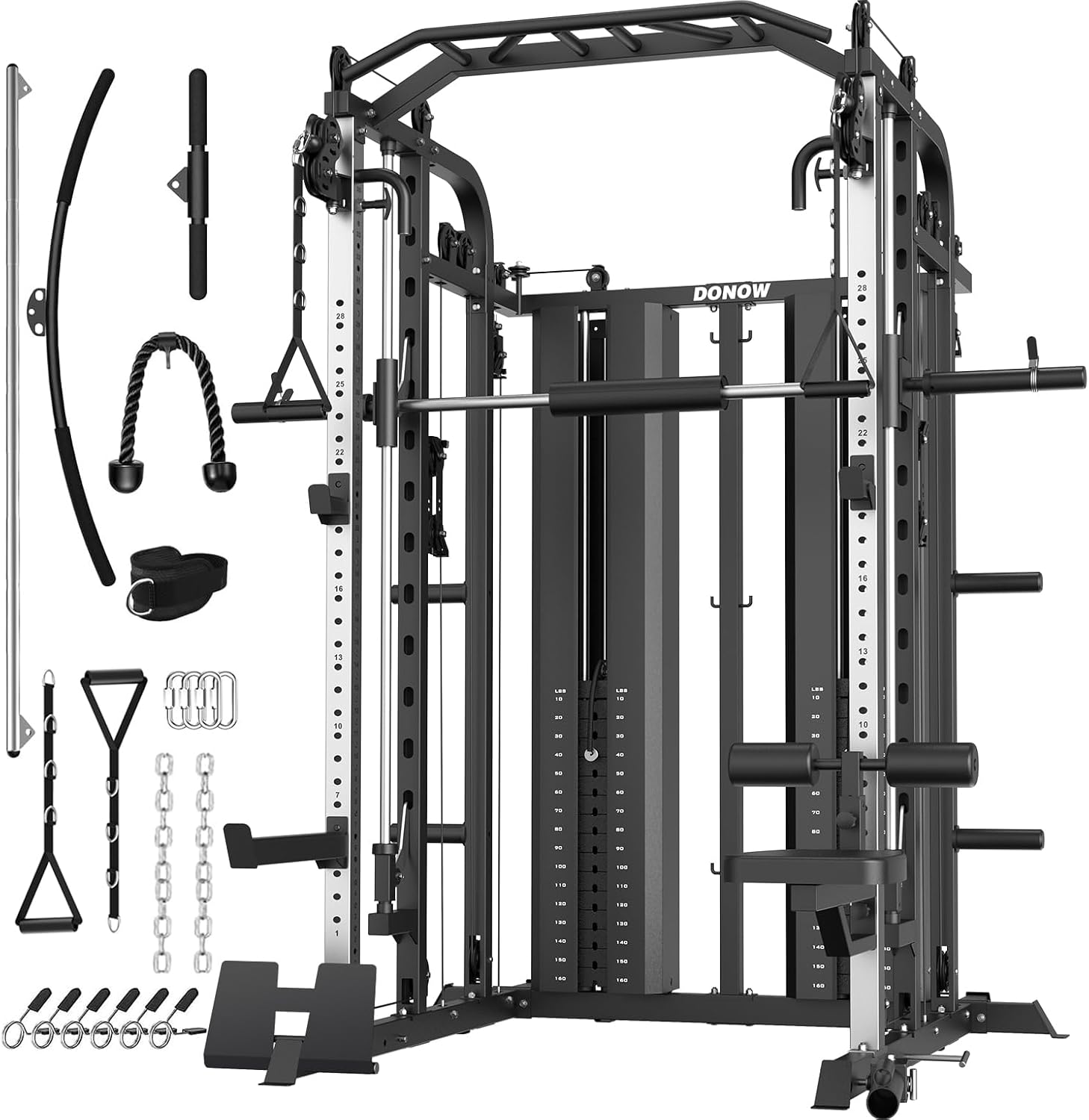
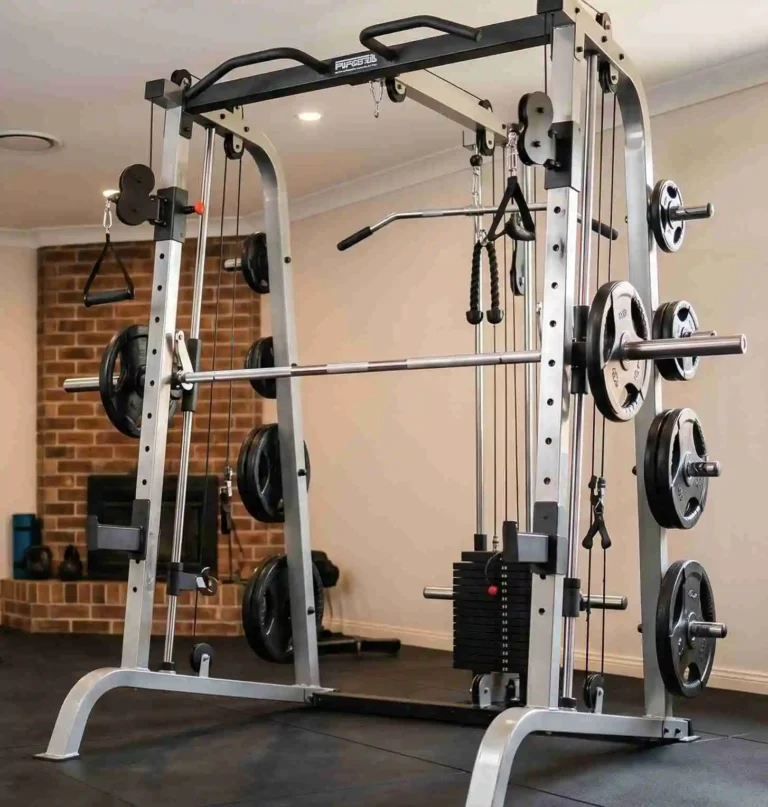
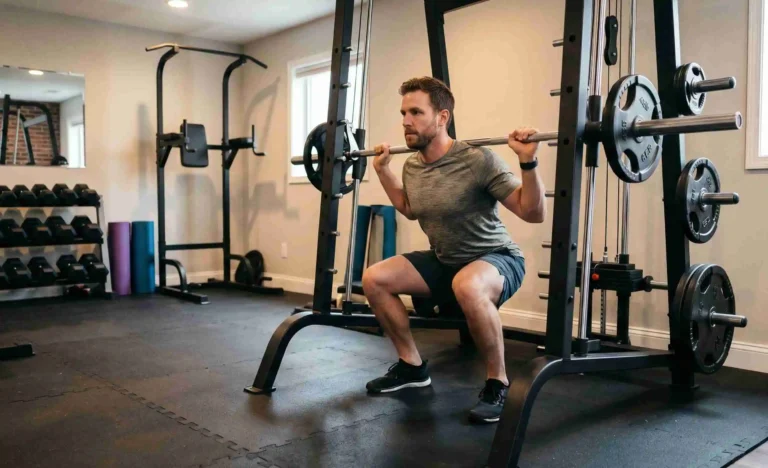
The DONOW Smith Machine with Weight Stacks takes a different approach. Instead of a free-standing rack, you get a guided Smith bar path combined with built-in weight stacks for the cable station. That means no loading and unloading plates between cable exercises — just move the pin. It’s a great fit for solo lifters who prioritize safety, older trainees, or anyone rehabbing an injury. The Smith bar guides your pressing and squatting path, which some lifters prefer for confidence under heavy loads. The trade-off is that the guided path doesn’t recruit stabilizer muscles the way a free-weight rack does, and the weight stacks cap your cable resistance lower than a plate-loaded system would. If you value speed and safety over raw free-weight versatility, this is the play.
CHECK PRICE ON AMAZON: https://amzn.to/4ayLREy
How to Get the Most Out of Your Power Rack with Pulley System
- Program cables into your split. Add cable crossovers on chest day, face pulls on pull day, and cable curls on arm day for constant tension your dumbbells can’t match.
- Use the low pulley for rows and deadlift accessories. Seated cable rows, single-arm rows, and cable pull-throughs build posterior chain strength that carries over to your big barbell lifts.
- Adjust the J-cups every session. Take ten seconds to set the hooks at the right height. Unracking a bar from too high or too low wastes energy and increases injury risk.
- Lubricate the pulleys quarterly. A drop of silicone-based lubricant on the pulley wheels keeps cables running smoothly and prevents jerky resistance.
- Bolt the rack to the floor if possible. Even the heaviest racks can shift during kipping pull-ups or heavy band work. Four concrete anchors eliminate that entirely.
Space and Setup Considerations
A full-size power rack with pulley system typically requires roughly 7 feet wide by 5 feet deep of floor space minimum. Add 2–3 feet of clearance on every side for safe bar loading and cable work.
Ceiling height is the hidden deal-breaker. Most combo racks stand 80–90 inches tall. A standard 8-foot ceiling barely clears a pull-up bar. Basement gyms with 7-foot ceilings may need a short rack.
Place at least two layers of 3/4-inch rubber stall mats under the rack to deaden noise, protect flooring, and prevent walking during heavy sets. If your floor slopes, use shims under the legs — a slanted squat is a bad squat.
Troubleshooting Common Issues
- Cable feels sticky or jerky: Clean the pulley wheels and apply silicone spray. Check for frayed cable sections catching on the guide.
- Rack wobbles during heavy squats: Confirm all bolts are torqued to spec. If the rack isn’t bolted down, anchor it to the floor or place heavy sandbags at the base.
- J-cups won’t slide smoothly: Lightly sand any powder coat buildup inside the upright holes. A thin coat of dry lubricant on the J-cup pin also helps.
- Cable weight feels lighter than expected: You likely have a 2:1 pulley ratio. Double your loaded weight mentally, or switch to a 1:1 system if your rack supports it.
- Uneven cable resistance left vs. right: Check that both cable paths are routed identically and that no cable is rubbing against the frame. Replace cables in pairs if one is stretched.
- Pull-up bar flexes under bodyweight: This usually means the bar is a bolt-on rather than welded. Tighten the fasteners and consider adding a support bracket if the manufacturer sells one.
Expert Take
Combining barbell training with cable work isn’t just convenient — it’s backed by exercise science. According to the American Council on Exercise (ACE), cable machines provide constant tension throughout the full range of motion, improving muscle activation during isolation exercises compared to free weights alone. The National Strength and Conditioning Association (NSCA) emphasizes that multi-planar resistance training — exactly what cables enable — contributes to balanced muscular development and reduces overuse injury risk.
For home gym owners, an all-in-one rack with pulleys removes the biggest barrier to cable training: space and cost. Instead of a separate functional trainer eating up 15 square feet, you get equivalent movement variety inside the rack you already need for squats and bench.
FAQs
What is a power rack with pulley system?
It’s a squat cage with built-in cable pulleys — usually a high pulley for pulldowns and a low pulley for rows. This combo lets you do barbell lifts and cable exercises in one station.
Can I do lat pulldowns on a power rack with cables?
Yes. Most racks with a high pulley include a lat pulldown bar and knee pad. Sit on the included seat or a flat bench, and you’ve got a fully functional pulldown station.
How much space do I need for a power rack with pulley system?
Plan for roughly 7 feet wide by 6 feet deep of dedicated floor space, plus 2–3 feet of clearance on each side for loading plates and performing cable movements safely.
Is a plate-loaded pulley better than a weight stack?
Plate-loaded systems offer higher max resistance and cost less upfront. Weight stacks let you change resistance faster with a pin. Choose based on whether you value heavier loads or quicker transitions.
Can beginners use a power rack with pulley system?
Absolutely. The safety pins protect you during heavy barbell lifts, and cables offer controlled resistance that’s easier to learn proper form on. It’s a solid setup for any experience level.
How do I maintain the cables on my power rack?
Inspect cables monthly for fraying. Apply silicone lubricant to the pulley wheels every few months. Replace any cable that shows visible wear — a snapped cable under load is dangerous.
Do I need to bolt my power rack to the floor?
It’s strongly recommended if you have a concrete floor. Bolting prevents the rack from tipping or shifting during heavy lifts, kipping pull-ups, or band-resisted work. If bolting isn’t an option, load the base with heavy plates.
What ceiling height do I need for a power rack?
Most full-size racks are 80–90 inches tall. You’ll want at least 6 inches of clearance above the rack for pull-ups. A standard 8-foot ceiling works, but measure your specific rack before purchasing.
Are power racks with pulley systems worth it compared to separate machines?
For most home gyms, yes. You get 80–90% of the functionality of a dedicated cable machine combined with your squat rack, at a fraction of the combined cost and footprint.
Can I add attachments to my power rack later?
Most quality racks use standard hole sizes (5/8-inch or 1-inch) that accept third-party accessories. Check your rack’s hole spacing and diameter before buying aftermarket dip handles, landmine attachments, or extra J-cups.
Conclusion
A power rack with pulley system is the smartest single investment you can make for a home gym that does everything. You get heavy barbell training, cable isolation work, pull-ups, and dips — all in one footprint that fits most garages and basements. The Pooboo Multi-Functional Machine Power Cage earns our top spot for its 2,000 lb capacity, dual cable columns, and complete attachment package at a competitive price. If you prefer guided bar paths and pin-selectable weight stacks for quicker, safer solo sessions, the DONOW Smith Machine with Weight Stacks is an excellent alternative. Whichever direction you go, you’re building a gym that can grow with you for years. Pick the one that matches your training style, clear out some garage space, and get after it.