Affiliate Disclosure: MyHomeGymPro.com is reader-supported. When you buy through links on our site, we may earn an affiliate commission at no extra cost to you.
You just crushed a heavy squat session. Legs are shaking, you’re dripping sweat, and the last thing you want to do is lace up running shoes and drive to a commercial gym for cardio. But you know skipping conditioning is slowly killing your recovery and work capacity. An air bike sitting ten feet from your rack solves that problem forever. No settings to fiddle with, no class schedules, no excuses. Just sit down, grab the handles, and let the fan decide how hard your day gets. Finding the best air bike is the difference between a dust collector and the most brutal — and effective — cardio tool in your garage.
Quick Answer
An air bike (also called a fan bike) uses wind resistance generated by a large fan to deliver unlimited, self-scaling intensity — the harder you push, the harder it pushes back. Our top pick is the Schwinn Airdyne Bike Series for its rock-solid build quality, smooth dual-action motion, and decades of proven reliability in home and commercial gyms. It’s ideal for anyone who wants a no-nonsense conditioning tool that lasts for years.
TL;DR
The Schwinn Airdyne is our best overall air bike for most home gym owners thanks to its durability and progressive resistance curve. If you’re on a tighter budget and still want a solid full-body cardio option, the Wenoker Exercise Bike Air delivers surprising quality at a fraction of the cost.
Key Takeaways
- Air bikes scale to your effort — beginners and advanced athletes use the same machine without changing a single setting.
- Full-body conditioning — the dual-action arms recruit your upper body, making air bikes more metabolically demanding than standard stationary cycles.
- The Schwinn Airdyne Bike Series is our top pick for build quality, smooth resistance, and long-term reliability.
- Budget-friendly alternative: The Wenoker Exercise Bike Air is a strong option under tight budgets without sacrificing core functionality.
- Minimal maintenance — fan-based resistance means fewer parts to break compared to magnetic or friction systems.
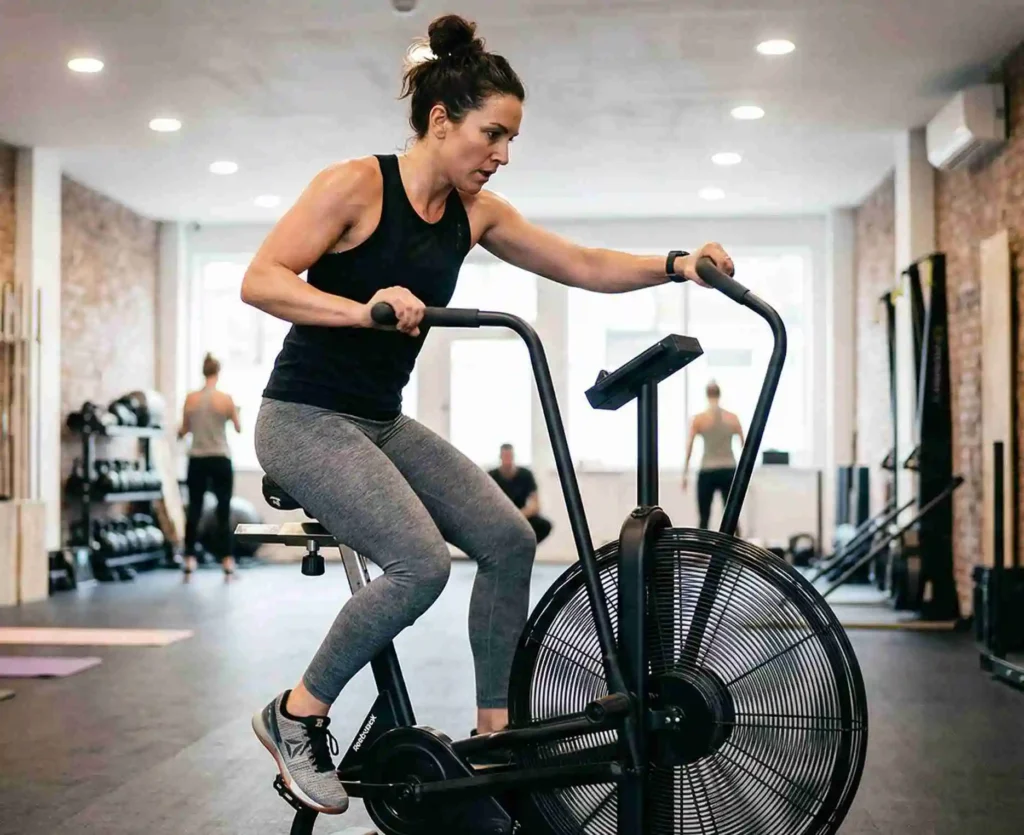
Table of Contents
What to Look For in an Air Bike
Resistance Feel and Smoothness
Not all fan resistance is created equal. Cheaper models can feel choppy or create dead spots in the pedal stroke. Look for a bike with a large, multi-blade fan that delivers progressive, consistent resistance throughout the full rotation. A smooth resistance curve means you can sustain longer intervals without knee or hip irritation.
Frame and Build Quality
Air bikes take a beating — sprint intervals, standing efforts, and aggressive upper-body pulls create serious lateral force. A heavy-gauge steel frame with a wide base keeps things planted. If the bike wobbles at high RPMs, you’ll waste energy stabilizing instead of conditioning.
Seat Comfort and Adjustability
You’ll spend anywhere from 10-minute Tabata sessions to 45-minute steady-state rides on this thing. A wide, padded seat with easy vertical and horizontal adjustment accommodates different body types. Some models allow aftermarket seat swaps, which is a huge bonus.
Console and Tracking
A basic LCD showing time, distance, calories, RPM, and heart rate is all you really need. Fancy touchscreens are nice, but they add cost and potential failure points. Prioritize readability and simplicity over flashy features.
Weight Capacity and Stability
Check the maximum user weight rating. A higher weight capacity usually signals a beefier frame overall. Look for models rated at 250 lbs or above, and pay attention to whether the bike has leveling feet or floor stabilizers for uneven garage surfaces.
Noise Level
Every air bike makes noise — that’s the fan doing its job. But some are significantly louder than others. If your gym shares a wall with a bedroom or living space, consider models known for quieter fan designs. You probably won’t find a silent air bike, but the range between “tolerable” and “jet engine” is real.
Arm Handle Design
The push-pull handles should feel natural and move in a smooth arc. Awkward handle angles create wrist strain during long sessions. Some bikes offer fixed handles alongside the moving arms, giving you the option to isolate your legs when needed.
Common Mistakes When Buying an Air Bike
- Buying based on price alone. The cheapest air bike often has a wobbly frame and a rough pedal stroke that makes longer sessions miserable. The fix: Set a realistic budget and prioritize frame stability and resistance smoothness over accessories.
- Ignoring the bike’s footprint. Air bikes are wider than standard spin bikes, and you need clearance around the handles. The fix: Measure your space and add at least 12 inches on each side for comfortable arm movement.
- Skipping the weight capacity check. Exceeding the rated limit accelerates wear on the crank, pedals, and frame joints. The fix: Choose a bike rated at least 20–30 lbs above your body weight.
- Expecting gym-quality at rock-bottom prices. Sub-$200 air bikes often use plastic components in high-stress areas. The fix: Treat your air bike like an investment — a solid one lasts a decade or more.
- Overlooking seat quality. Stock seats on budget models can be genuinely painful after 15 minutes. The fix: Check if the seat post uses a standard size so you can upgrade later if needed.
- Forgetting about noise. If you train early mornings or late nights in a shared living space, fan noise matters. The fix: Read real user reviews that specifically mention noise levels during high-intensity intervals.
Our Top Picks
Best Overall: Schwinn Airdyne Bike Series
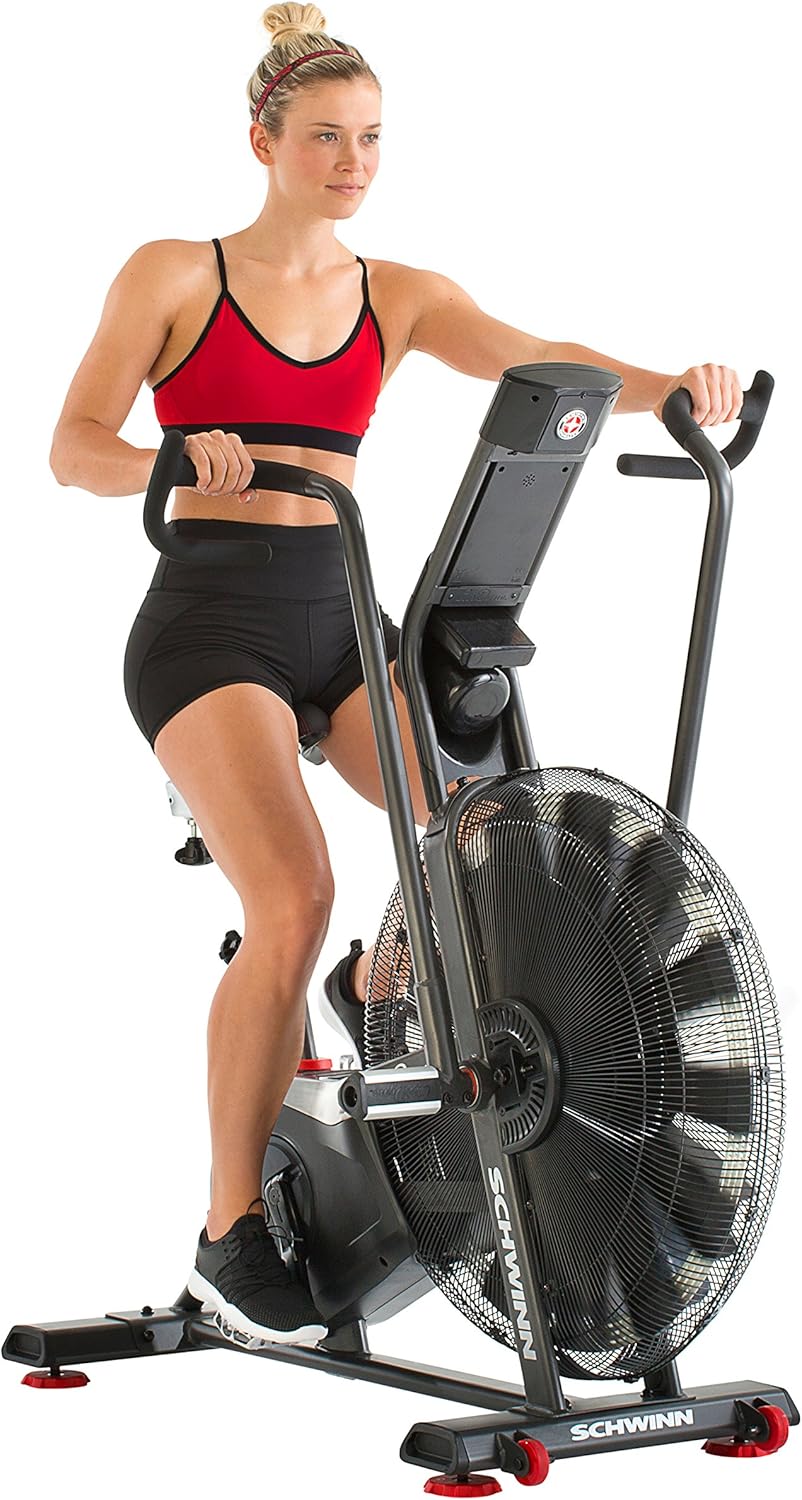
The Schwinn Airdyne Bike Series is the gold standard for home gym air bikes, and for good reason. Schwinn has been refining this design for decades, and the result is a machine that feels dialed-in from the first pedal stroke. The progressive wind resistance is incredibly smooth — no dead spots, no jarring transitions. The heavy steel frame stays planted even during all-out sprints, and the dual-action arms provide a genuine upper-body workout that lighter competitors simply can’t match.
It’s ideal for home gym owners who want one cardio machine that handles everything from light recovery spins to soul-crushing Tabata intervals. The console is straightforward, giving you the data you need without unnecessary complexity. The seat is comfortable enough for moderate sessions, though serious endurance riders may want to swap it out eventually.
The only real downside is the price — it sits above budget options. But when you factor in the build quality and longevity, the cost-per-year is hard to beat.
CHECK PRICE ON AMAZON: https://amzn.to/4c4n0tq
Best Budget Pick: Wenoker Exercise Bike Air
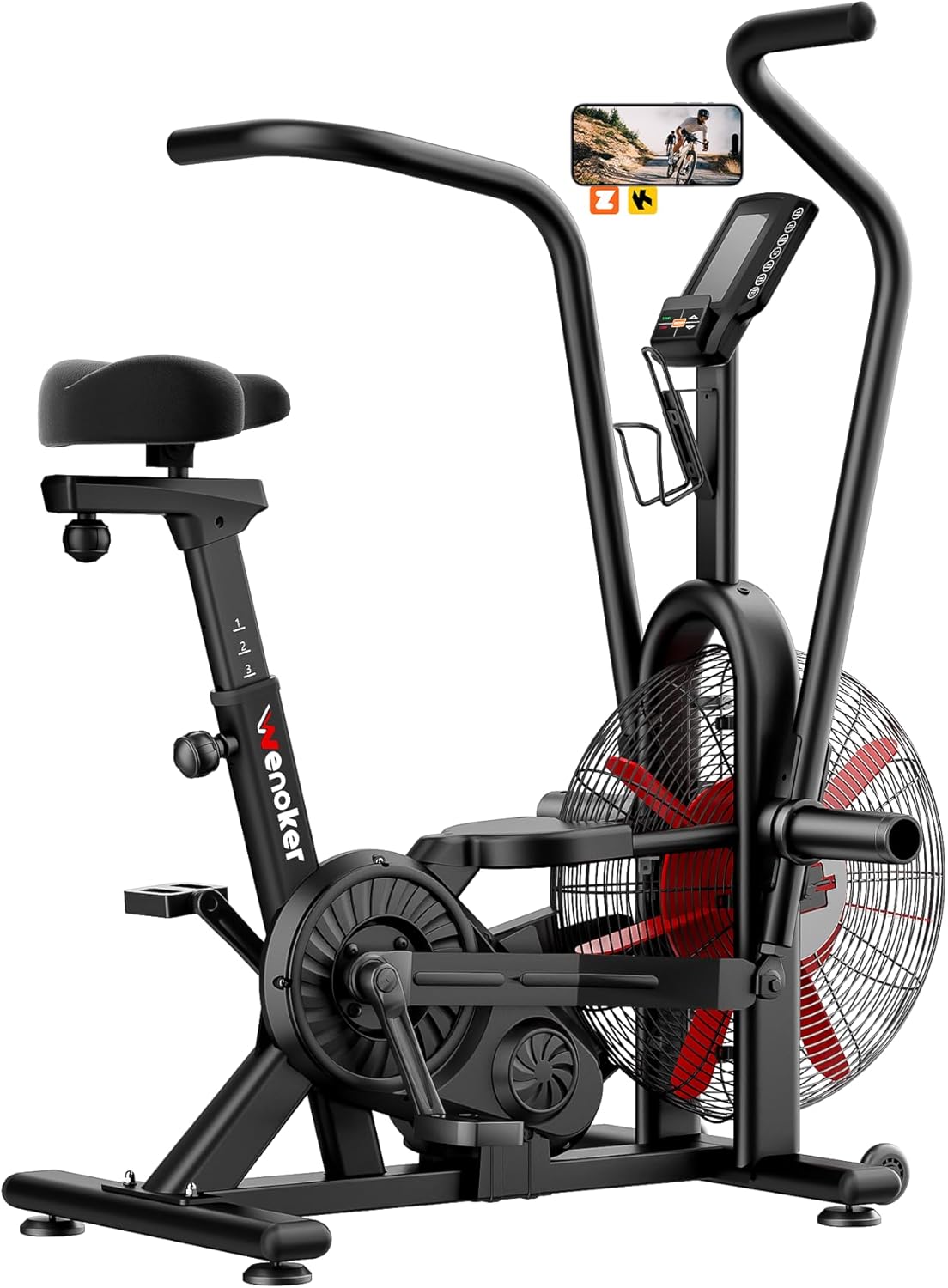
The Wenoker Exercise Bike Air punches well above its price point. For lifters who need a fan bike for conditioning work but aren’t ready to drop premium money, this is a legitimate option. The fan resistance is honest and responsive, and the frame feels more stable than you’d expect given the price tag.
It’s best suited for home gym owners who primarily use air bike work as a supplement — 10 to 20 minute sessions for conditioning, warm-ups, or active recovery. The console covers the basics, and the adjustable seat fits a reasonable range of body types. It won’t match the Schwinn’s buttery-smooth resistance feel or absolute tank-like stability, but it gets the job done without cutting dangerous corners.
Honest limitation: the seat padding wears faster, and taller riders (6’2″ and above) may find the fit a touch cramped. But for the money, it’s the strongest budget air bike we’ve tested.
CHECK PRICE ON AMAZON: https://amzn.to/4cJaf7L
How to Get the Most Out of Your Air Bike
- Start with short intervals. Air bikes humble everyone. Begin with 20 seconds on, 40 seconds off for 8 rounds. That’s only about 8 minutes — and it’ll be plenty.
- Use it as a warm-up tool. Three to five minutes of easy pedaling before lifting increases core temperature and lubricates joints without fatiguing your muscles.
- Program it after strength work. Place your conditioning at the end of your session so it doesn’t compromise your heavy lifts. Even 10 minutes of moderate effort post-workout dramatically improves cardiovascular health.
- Track your metrics. Write down your calories burned or distance covered per session. Progressive overload applies to cardio too — small improvements over time compound into serious fitness gains.
- Alternate arm-only and leg-only intervals. Most air bikes let you use just the arms or just the legs. This is a great way to add variety and target specific energy systems.
- Keep the chain or belt lubricated. Check your owner’s manual for maintenance intervals. A little lube every few months keeps the pedal stroke smooth and extends the bike’s lifespan.
- Place a fan mat underneath. Air bikes can move on smooth floors during hard efforts. A rubber equipment mat protects your floor and keeps the bike from creeping.
Space and Setup Considerations
Air bikes typically occupy a footprint of roughly 50 inches long by 25 inches wide. However, you need more space than just the bike itself. The moving handles sweep outward, so plan for at least 12–18 inches of clearance on each side. Behind the bike, the fan blows air, so avoid placing it flush against a wall — a few inches of breathing room helps with airflow and noise.
Ceiling height is rarely an issue since you’re seated, but if you’re in a low-ceiling basement, confirm you’ve got at least 5–6 feet of vertical clearance. Flooring matters too. Concrete garage floors work fine with a mat underneath. If your gym is on an upper floor, the mat also dampens vibration transmitted to rooms below.
No special electrical setup is required — air bikes are fully self-powered. That’s one of their biggest advantages. Put it anywhere you’ve got floor space, and you’re ready to ride.
Troubleshooting Common Issues
- Bike wobbles during sprints: Check that all four feet are making full contact with the floor. Use the adjustable leveling feet, or place a thin shim under the short leg.
- Squeaking or grinding noise from the pedals: Tighten the pedal threads (remember, left pedal is reverse-threaded). Apply a small amount of grease to the threads.
- Console not displaying properly: Replace the batteries — most air bike consoles run on AA or AAA batteries that drain over several months.
- Seat feels uncomfortable after 10 minutes: Consider a gel seat cover or upgrade to a wider aftermarket saddle with a standard post diameter.
- Resistance feels inconsistent at low speeds: This is normal for air bikes — fan resistance is minimal at slow RPMs. Increase your cadence to feel the resistance engage.
- Chain slipping or skipping: Adjust the chain tension per your manual’s instructions. A loose chain loses power transfer and accelerates wear on the sprockets.
Expert Take
Air bikes have earned their brutal reputation for a reason. According to the American Council on Exercise (ACE), fan bikes are among the most effective tools for high-intensity interval training because the resistance auto-regulates to the user’s effort level. This makes them uniquely accessible — a complete beginner and a seasoned CrossFit athlete can train on the same machine and each get an appropriate stimulus.
Research published by the National Strength and Conditioning Association (NSCA) supports the use of concurrent upper and lower body exercise for maximizing caloric expenditure in shorter time frames. The dual-action design of an air bike engages more total muscle mass per session than a traditional stationary bike, leading to greater EPOC (excess post-exercise oxygen consumption) — the “afterburn” effect that keeps your metabolism elevated after you finish training. For home gym owners who want maximum conditioning value from a single piece of equipment, an air bike is hard to beat.
FAQs
Is an air bike good for weight loss?
Yes. Air bikes burn more calories per minute than most cardio machines because they engage both your upper and lower body simultaneously. Combined with a caloric deficit, they’re one of the most efficient tools for fat loss.
How long should I ride an air bike?
For HIIT, 10–20 minutes is plenty. For steady-state cardio, 20–30 minutes at a moderate pace works well. Quality always beats duration on a fan bike.
Are air bikes bad for your knees?
No. The circular pedal motion is low-impact and generally knee-friendly. If you experience discomfort, adjust the seat height so your leg has a slight bend at the bottom of the stroke.
How loud are air bikes?
Air bikes produce noticeable fan noise, typically between 60–80 decibels at moderate to high intensity. That’s roughly the volume of a normal conversation to a vacuum cleaner.
Can I use an air bike every day?
Yes, as long as you vary your intensity. Low-intensity recovery rides can be done daily. Reserve hard sprint sessions for 2–3 times per week to allow adequate recovery.
What muscles does an air bike work?
Air bikes target your quads, hamstrings, glutes, calves, chest, back, shoulders, and arms. The simultaneous push-pull of the handles creates a true full-body workout.
Do air bikes need electricity?
No. Air bikes are entirely self-powered by your pedaling. The console typically runs on batteries. You can place the bike anywhere without needing an outlet.
Is an air bike better than a rowing machine?
Both are excellent full-body cardio tools. Air bikes are better for short, high-intensity sprints. Rowing machines emphasize posterior chain strength more. Many home gym owners eventually own both.
How do I maintain an air bike?
Wipe it down after each use to prevent sweat corrosion. Lubricate the chain or belt every 2–3 months. Check pedal tightness monthly. That’s about it — they’re low-maintenance machines.
What’s the difference between an air bike and a spin bike?
Spin bikes use friction or magnetic resistance and focus only on legs. Air bikes use fan-based resistance and include moving arm handles for full-body engagement. Air bikes are also self-regulating — resistance increases automatically as you pedal harder.
Conclusion
An air bike is the single most versatile conditioning tool you can add to a home gym. It scales to any fitness level, crushes calories in minimal time, and requires almost zero maintenance. If you’re serious about building a complete training setup, a fan bike fills the cardio gap that barbells and dumbbells can’t.
Our top recommendation is the Schwinn Airdyne Bike Series for its proven durability, smooth resistance, and rock-solid stability. If budget is a primary concern, the Wenoker Exercise Bike Air offers honest performance at a price that won’t wreck your gym fund. Either way, once you start riding, you’ll wonder how you ever trained without one. Pick the one that fits your budget, clear a spot in your gym, and get ready for the best (and worst) cardio sessions of your life.