Affiliate Disclosure: MyHomeGymPro.com is reader-supported. When you buy through links on this page, we may earn an affiliate commission at no extra cost to you. All opinions are our own.
Two Gym Floors, One Big Decision
You finally pulled the trigger on a proper squat rack and a set of bumper plates. The equipment is dialed in. But every time you drop a deadlift, the garage floor shakes, the plates slide, and your spouse gives you that look from two rooms away. Without solid home gym flooring mats under your equipment, your concrete slab is taking a beating — and so is your sanity. You’ve narrowed it down to two popular options: a continuous rubber roll and interlocking puzzle tiles. So which one actually deserves your garage floor?
Quick Answer
If you want a seamless, commercial-grade floor that stays put under heavy racks and deadlifts, the IncStores 8mm Thick Strong Rubber Flooring Roll is the better buy. It lays flat, doesn’t shift, and handles serious abuse. If you’re on a tighter budget, train lighter, or need a flooring solution you can install and remove easily, the ProsourceFit Exercise Puzzle Mat 3/4″ – Black-96 is a solid, wallet-friendly alternative. Both protect your subfloor — they just serve different types of lifters.
TL;DR
The IncStores rubber roll wins for heavy lifters who want a permanent, gap-free surface. The ProsourceFit puzzle mat wins for versatility, budget-friendliness, and easy DIY install. Pick based on how hard you train and how permanent your setup is.
Key Takeaways
- Rubber rolls eliminate seams — no shifting tiles during heavy deadlifts or sled pushes.
- Puzzle mats cost less per square foot and are far easier to install solo.
- For racks, platforms, and Olympic lifting, rubber rolls offer superior stability.
- For bodyweight, dumbbell, or mixed-use spaces, puzzle mats get the job done at half the hassle.
- Both options protect concrete from dropped weights and reduce noise significantly.
Table of Contents
Overview: What Are Home Gym Flooring Mats?
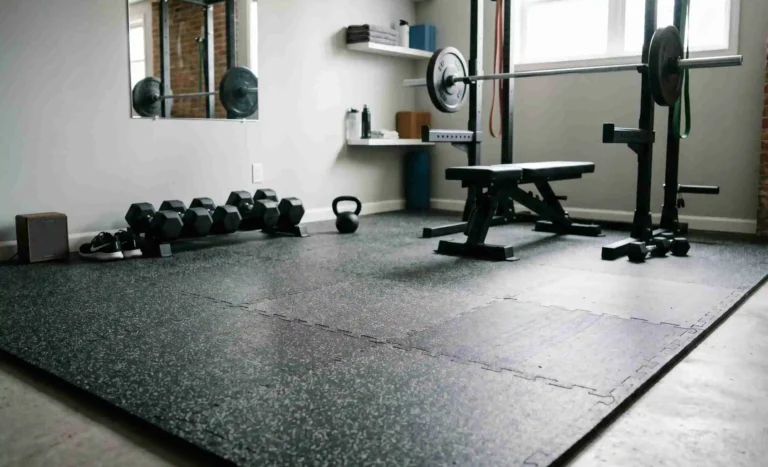
Home gym flooring mats are protective surfaces you lay down on top of your existing floor — typically concrete, wood, or tile. They absorb impact from dropped weights, reduce vibration and noise, protect your subfloor from cracks and dents, and give you a stable, non-slip surface to train on.
The two most common types for home gyms are rubber rolls and interlocking puzzle tiles. Rubber rolls come in large, continuous sheets that you cut to size and lay flat. Puzzle tiles snap together like a jigsaw and are modular by design. Each approach has clear trade-offs in durability, ease of installation, and long-term performance.
Choosing between the two comes down to your training style, how permanent your setup is, and how much you’re willing to spend.
Head-to-Head Comparison Table
| Feature | IncStores Rubber Roll | ProsourceFit Puzzle Mat |
|---|---|---|
| Material | Recycled rubber | EVA foam |
| Thickness | 8mm (≈5/16″) | 3/4″ (19mm) |
| Coverage Area | Sold by the roll (various widths) | 96 sq ft (24 tiles) |
| Surface Texture | Smooth with slight grip | Textured top |
| Seams/Gaps | None — continuous surface | Interlocking seams every 2 ft |
| Noise Reduction | Moderate — dense rubber dampens impact | Good — thicker foam absorbs more vibration |
| Weight Capacity | Excellent — handles heavy racks and bars | Moderate — compresses under extreme loads |
| Installation | Roll out + cut to fit (utility knife) | Snap tiles together (no tools needed) |
| Portability | Low — heavy and semi-permanent | High — tiles pull apart and stack |
| Odor | Rubber smell for 1–3 weeks | Minimal to none |
| Best For | Powerlifting, Olympic lifting, permanent setups | General fitness, bodyweight, lighter training |
| Price Point | Mid-range | Budget-friendly |
IncStores 8mm Thick Strong Rubber Flooring Roll — Full Breakdown
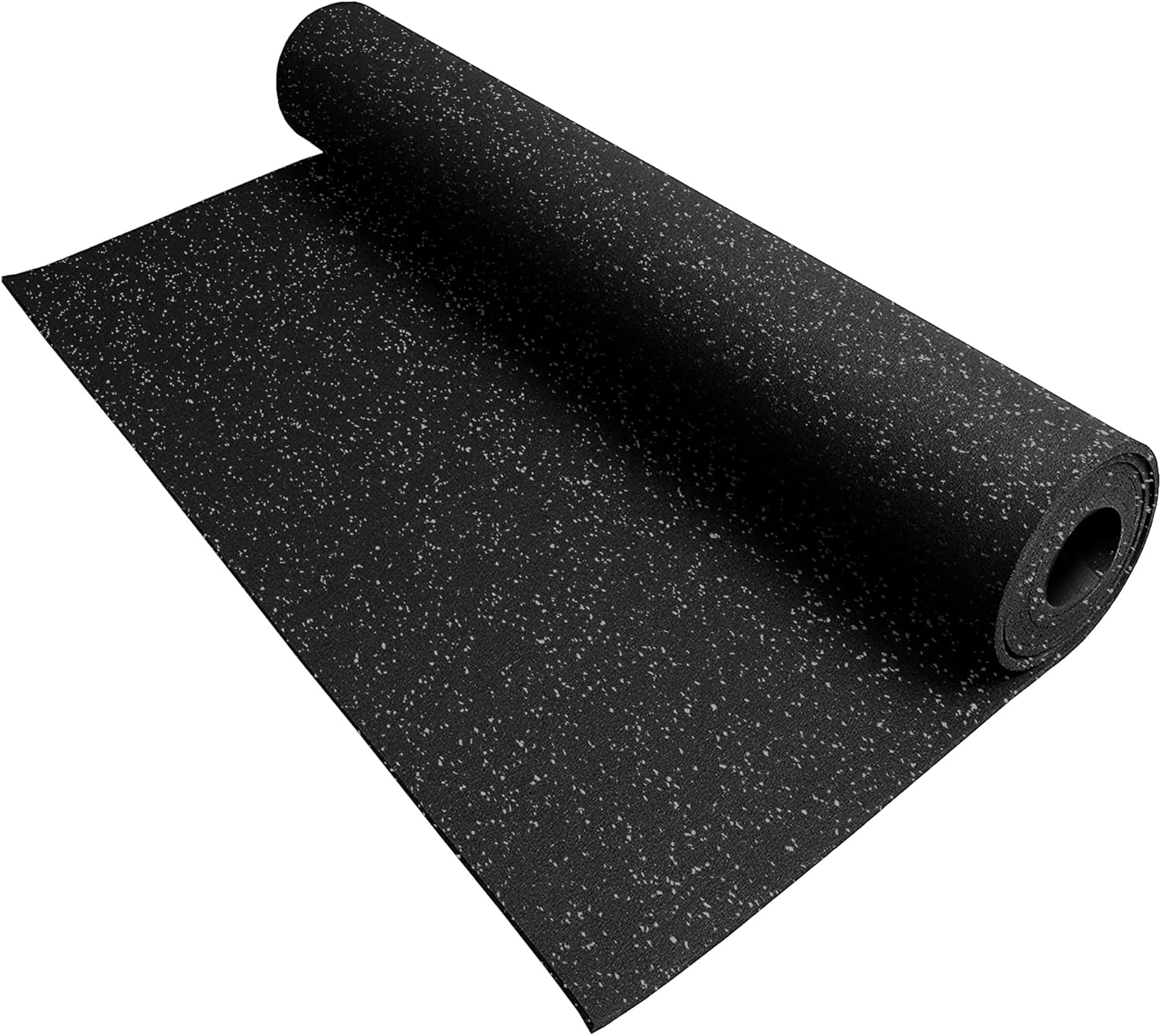
The IncStores 8mm Thick Strong Rubber Flooring Roll is built for lifters who want their floor to feel like a commercial gym. Made from dense recycled rubber, it lays flat with zero seams, which means nothing shifts when you’re grinding out heavy pulls or reracking a loaded barbell. It’s ideal for anyone building a permanent or semi-permanent lifting space in a garage or basement.
The biggest strength here is stability. Heavy squat racks, deadlift platforms, and benches sit flush without creating pressure divots the way foam tiles do over time. Cleanup is dead simple — a damp mop handles chalk dust and sweat. The main downside is the initial rubber smell, which can be strong for the first couple of weeks, especially in enclosed spaces. It’s also heavier and harder to install solo since you’ll need a utility knife to cut it to size.
CHECK PRICE ON AMAZON: https://amzn.to/4u6MHAe
ProsourceFit Exercise Puzzle Mat 3/4″ – Black-96 — Full Breakdown

The ProsourceFit Exercise Puzzle Mat 3/4″ – Black-96 is the go-to for home gym owners who need a fast, affordable flooring solution. At 96 square feet of coverage, this set handles most single-car garage setups. The interlocking EVA foam tiles snap together in minutes — no adhesive, no cutting, no second pair of hands required.
For bodyweight circuits, dumbbell work, kettlebell training, and cardio machines, these mats perform well. The 3/4-inch thickness provides comfortable cushioning that’s easier on joints during floor exercises. Where puzzle mats fall short is under heavy, concentrated loads. A loaded squat rack can compress the foam over months, and the seams between tiles can separate during lateral movements or sled pushes. If you train heavy and plan to keep your setup long-term, you’ll eventually notice the wear.
CHECK PRICE ON AMAZON: https://amzn.to/46pNDW1
Category-by-Category Verdict
Durability and Longevity
The IncStores rubber roll wins here. Dense rubber resists compression from heavy loads and doesn’t degrade at the seams because there aren’t any. EVA foam is softer by nature, and the ProsourceFit tiles will show indentations under rack feet and heavy equipment over time. For a gym built to last, rubber rolls are the long game.
Winner: IncStores Rubber Roll
Ease of Installation
The ProsourceFit puzzle mat wins this one by a mile. You open the box, pop the tiles together, and you’re training in under 30 minutes. The rubber roll requires measuring, cutting with a utility knife, and possibly adhesive tape for large areas. If you rent your space or move frequently, puzzle tiles make life much easier.
Winner: ProsourceFit Puzzle Mat
Noise and Impact Absorption
This is closer than most people expect. The ProsourceFit mat’s 3/4-inch EVA foam actually absorbs more vibration per drop than the thinner 8mm rubber roll. If you’re in an apartment or upstairs space where noise transfer is a concern, the thicker foam has an edge. However, for heavy barbell drops specifically, the rubber roll’s density prevents the “bottoming out” that foam can suffer from.
Winner: Tie — depends on your training style
Stability Under Heavy Equipment
No contest. The IncStores rubber roll provides a flat, seamless surface that doesn’t compress, shift, or separate under a loaded power rack. Puzzle mats work fine under lighter equipment but can warp and gap under sustained heavy loads. If you own a squat rack, this category alone might make your decision.
Winner: IncStores Rubber Roll
Value for Money
The ProsourceFit puzzle mat covers 96 square feet at a significantly lower cost per square foot than most rubber roll options. For home gym owners who train with moderate loads or who need flooring for a mixed-use space, the puzzle mat delivers excellent bang for the buck.
Winner: ProsourceFit Puzzle Mat
Who Should Buy Which?
Buy the IncStores Rubber Roll if you:
- Own or plan to own a squat rack, deadlift platform, or barbell setup
- Want a permanent or semi-permanent gym floor
- Train with heavy loads (300+ lbs regularly)
- Prioritize long-term durability over easy install
- Don’t mind the initial rubber smell and a bit more setup effort
Buy the ProsourceFit Puzzle Mat if you:
- Train primarily with dumbbells, kettlebells, or bodyweight
- Rent your space and need a portable flooring option
- Want the fastest, easiest install possible
- Are covering a large area on a tight budget
- Use your gym space for multiple purposes (kids play, yoga, etc.)
FAQs
Can I put a squat rack on puzzle mats?
You can, but EVA foam compresses under heavy, concentrated loads. For racks over 300 lbs total load, rubber rolls or plywood subflooring under the rack feet is a better call.
Do rubber roll gym floors smell?
Yes, new rubber rolls have a noticeable odor for roughly one to three weeks. Ventilating the space with fans or open windows speeds up off-gassing significantly.
How thick should home gym flooring be?
For most home gyms, 8mm to 3/4 inch works well. Thicker mats (3/4″+) absorb more noise and impact, while thinner rubber provides more stability for heavy equipment.
Can I use puzzle mats on carpet?
You can, though they may shift on thick or plush carpet. They work best on low-pile carpet or hard surfaces like concrete, tile, or hardwood.
How do I clean rubber gym flooring?
A damp mop with mild soap handles most messes. Avoid harsh chemicals or bleach. For chalk buildup, a stiff-bristle broom works well before mopping.
Do I need to glue down rubber roll flooring?
For most garage gyms, the weight of the rubber and your equipment keeps it in place. Double-sided carpet tape along edges helps in larger spaces or high-traffic areas.
Are EVA foam mats safe for heavy deadlifts?
EVA foam absorbs light to moderate drops, but it bottoms out under heavy barbell impacts. For serious deadlifting, pair puzzle mats with a dedicated deadlift platform or switch to rubber.
Final Verdict
Both of these options protect your floor and make your home gym a more functional space. But they’re built for different lifters. The IncStores 8mm Thick Strong Rubber Flooring Roll is the pick for anyone building a serious, long-term lifting setup. It handles the abuse of heavy barbells, stays flat under racks, and gives you a surface that performs like a real gym floor. The ProsourceFit Exercise Puzzle Mat 3/4″ – Black-96 is the smarter buy if you train lighter, need portability, or want to floor a large space without breaking the bank. According to the American Council on Exercise, proper gym flooring reduces injury risk and noise — so either way, investing in your floor is one of the highest-value upgrades you can make. Pick the one that matches how you actually train, lay it down, and get to work.
CHECK PRICE ON AMAZON (IncStores): https://amzn.to/4u6MHAe
CHECK PRICE ON AMAZON (ProsourceFit): https://amzn.to/46pNDW1