Affiliate Disclosure: MyHomeGymPro.com is reader-supported. When you buy through links on our site, we may earn an affiliate commission at no extra cost to you. This helps us keep creating honest, in-depth content for home gym owners like you.
Why Every Serious Home Lifter Needs a Smith Machine
You’ve been squatting in your garage for two years now, and you’ve hit that wall. Not a strength plateau — an equipment plateau. You want to push heavier weight on squats and presses, but training alone without a spotter means you’re always leaving reps in the tank. A power rack with safeties helps, but it doesn’t give you the guided bar path you need for heavy hack squats, close-grip presses, or those rehab-friendly movements your banged-up shoulders demand. A quality smith machine solves that problem — and in 2026, you can get an entire multi-station gym shipped to your garage for less than a year of commercial gym dues.
Quick Answer
If you’re looking for the best smith machine for a home gym, the Mikolo Smith Machine with Weight Stack is our top pick. It combines a smith press, cable crossover, lat pulldown, and power cage into one frame — giving you commercial-gym versatility without needing 500 square feet. It’s built for lifters who want real training variety at home and don’t want to buy five separate machines.
TL;DR
The Mikolo Smith Machine is the best all-around value for home gym owners who want a do-everything station. If you’re on a tighter budget or need a slightly more compact footprint, the OPPSDECOR All-in-One Smith Machine is a solid runner-up with similar functionality at a lower price point.
Table of Contents
Key Takeaways
- A home smith machine lets you train heavy without a spotter, making solo sessions safer and more productive.
- Look for an all-in-one design with cable crossover, lat pulldown, and power cage functionality to maximize your investment.
- Weight stack capacity matters — make sure the machine handles enough resistance for your current strength level and future progression.
- Ceiling height is the most overlooked factor; measure before you buy.
- Budget home smith machines have gotten dramatically better in quality since 2023.
What to Look For in a Home Smith Machine
Weight Capacity and Bar Rating
This is non-negotiable. The smith bar itself and the frame need to handle your working weight plus a healthy safety margin. Look for frames rated at 800 lbs or higher. If you’re squatting 300+ pounds, a machine rated at 400 lbs will feel sketchy fast.
Smooth Bar Path and Bearings
A cheap smith machine feels like dragging a shopping cart through gravel. Quality linear bearings make the bar glide. Test videos and user reviews are your friend here — if multiple reviewers mention “sticking” or “grinding,” walk away.
Cable System and Attachments
The best home smith machines in 2026 double as full cable stations. You want a lat pulldown, a low row, and ideally a cable crossover built into the frame. This turns one machine into an entire gym. Check the weight stack size — anything under 150 lbs on the stacks will limit you quickly.
Overall Footprint and Ceiling Height
Smith machines are tall. Many all-in-one models stand 7 feet or higher, which means standard 8-foot ceilings leave almost no clearance for overhead pressing. Measure your space floor-to-ceiling before you spend a dime.
Build Quality and Steel Gauge
You want 2×2 inch or 2×3 inch steel uprights at a minimum. Thicker gauge steel means less flex under heavy loads. Wobbly uprights are a safety hazard, not just an annoyance.
Safety Features
Lockout hooks, adjustable safeties, and a reliable bar catch system are essential. The entire point of a smith machine is safe solo lifting — if the safety mechanisms feel flimsy, the machine has failed its core job.
Versatility and Expansion
Can you add a dip attachment? A landmine? Extra pulleys? Machines that accept common accessories give you a growth path as your training evolves.
Common Mistakes When Buying a Smith Machine
- Ignoring ceiling height. The fix: Measure floor to ceiling with shoes on. Subtract 6 inches for clearance and overhead pressing range. Compare to the machine’s total height.
- Choosing based on price alone. The fix: A $300 smith machine will wobble, rust, and limit your progression. Budget at least $600–$900 for a machine that lasts.
- Forgetting about the cable stack weight. The fix: Check the included weight stack and whether it’s upgradeable. A 100 lb stack sounds fine until you realize your lat pulldowns already exceed that.
- Not planning for plate storage. The fix: Confirm the machine has built-in plate storage pegs, or budget for a separate tree. Loose plates on the floor are a tripped-shin waiting to happen.
- Skipping assembly help. The fix: These machines weigh 300–600 lbs and have 200+ parts. Recruit a friend and set aside a full day. Seriously.
- Assuming all smith bars weigh the same. The fix: Smith machine bars vary from 15 to 25 lbs depending on the counterbalance system. Know your bar weight so your training log stays accurate.
Our Top Picks
Best Overall: Mikolo Smith Machine

The Mikolo Smith Machine with Weight Stack is a legitimate all-in-one home gym system. It packs a smith press, power cage, cable crossover, and lat pulldown into a single frame — which is exactly what you need if your garage isn’t the size of a commercial floor. The guided bar path is smooth enough for heavy compound work, and the dual weight stacks give you independent cable resistance for accessory movements. It’s ideal for intermediate to advanced lifters who want training variety without buying four separate stations. The build quality is solid for the price, with heavy-gauge steel and stable footplates. One honest knock: assembly is a full-day project, and the instructions could be clearer. But once it’s up, this thing earns its floor space every single session.
CHECK PRICE ON AMAZON: https://amzn.to/46rSMNo
Best Budget Pick: OPPSDECOR All-in-One Smith Machine
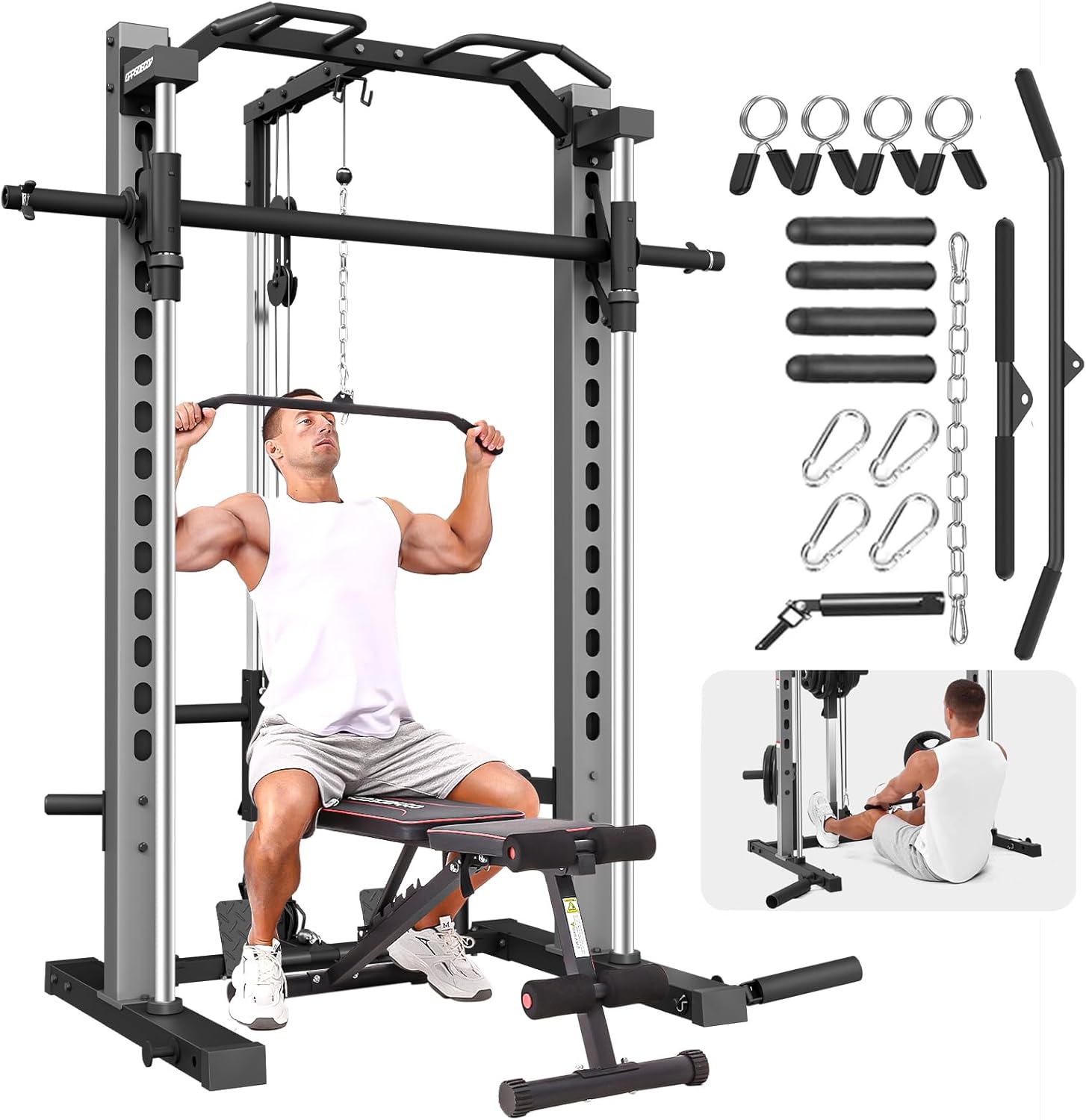
The OPPSDECOR All-in-One Adjustable Smith Machine hits a sweet spot for lifters who want multi-station functionality without the premium price tag. It includes a lat pulldown system, low cable row, and smith press in a reasonably compact frame. For beginners or intermediate lifters who aren’t pushing extreme weight, this machine delivers a huge range of exercises from one footprint. The adjustable components offer decent versatility for the cost. Where it falls short compared to the Mikolo is in overall weight capacity and the smoothness of the bar glide under heavier loads — if you’re squatting north of 350 lbs, you’ll probably feel the difference. But for most home gym owners building out their first serious setup, it’s an excellent entry point.
CHECK PRICE ON AMAZON: https://amzn.to/4u1gH0n
How to Get the Most Out of Your Smith Machine
- Learn proper bar path alignment. A smith machine locks you into a fixed plane. Position your feet and body so the bar travels naturally over your center of gravity for each lift. This prevents joint stress.
- Use the safety stops religiously. Set them one notch below your lowest range of motion for every exercise. This is your built-in spotter — use it.
- Don’t skip free weight work entirely. A smith machine is a tool, not a replacement for barbells and dumbbells. Use it for heavy overloads, burnout sets, and rehab movements. Keep free weight compounds in your program too.
- Grease the guide rods monthly. A light coat of silicone lubricant on the vertical rails keeps the bar path smooth and protects against rust. Takes two minutes.
- Rotate your cable attachments. Most home smith machines come with a straight bar and maybe a V-bar. Invest in a rope, a D-handle, and a wide-grip lat bar to triple your exercise selection on the cable stations.
- Track your smith bar weight separately. Your smith machine bar isn’t 45 lbs — it’s usually lighter due to counterbalancing. Weigh it once so every log entry is accurate.
- Anchor the machine to the floor if possible. Even heavy frames can shift during aggressive movements. Bolt-down kits or heavy rubber mats underneath add serious stability.
Space and Setup Considerations
Most all-in-one smith machines need a footprint of roughly 7 feet long by 5 feet wide at minimum. But you also need clearance space — at least 3 feet on each side for cable movements and plate loading, plus 4 feet in front for bench work.
Ceiling height is the biggest gotcha. Many smith machines stand 83–90 inches tall. If you have standard 8-foot (96-inch) ceilings, you’ll have almost no room for overhead pressing on the smith bar. A 9-foot or higher ceiling is ideal. Basement gyms with low ceilings may need a compact or short-frame model.
Flooring matters too. These machines weigh 300–600 lbs before you add plates. A solid rubber mat or horse stall mats will protect your floor and dampen noise. Concrete is the best subfloor — avoid placing a fully loaded smith machine on a wooden second-story floor without consulting a structural guide.
Ventilation is worth thinking about. You’ll be doing long sessions on this machine if it’s your primary station. A fan or open garage door makes a real difference in summer.
Troubleshooting
- Bar sticks or grinds during movement: Clean and lubricate the guide rods with silicone spray. Check for any debris or burrs on the rails.
- Machine wobbles during heavy lifts: Confirm all bolts are fully tightened (recheck after the first week of use). Consider bolting the frame to the floor or placing it on a non-slip mat.
- Cable system feels jerky: Inspect the cable for fraying and make sure it’s properly seated in all pulleys. Lubricate the pulley wheels.
- Weight stack pins jam: Clean the pin hole and the selector rod. A quick hit of WD-40 usually resolves this.
- Uneven bar path: Check that the machine is on a perfectly level surface. Use a bubble level on the uprights and shim if necessary.
- Noisy operation: Tighten every bolt and connection point. Add rubber washers between metal-on-metal contact points if needed.
Expert Take
Smith machines have a long history of debate in the fitness world, but the research supports their place in a well-rounded program. According to the American Council on Exercise (ACE), machine-guided movements can be especially beneficial for isolating specific muscle groups, training through injuries, and providing a safe overload stimulus for solo lifters. The National Strength and Conditioning Association (NSCA) notes that while free weights should remain the foundation of strength training, smith machines offer unique advantages for progressive overload on movements like hip thrusts, close-grip bench press, and inverted rows — exercises where the fixed bar path becomes an advantage rather than a limitation.
For home gym owners specifically, the modern all-in-one smith machine represents one of the best value propositions in the equipment market. You’re essentially getting a power cage, cable station, and guided press system in a single purchase. If you train alone — and most home gym lifters do — that safety factor alone justifies the investment.
Frequently Asked Questions
Is a smith machine worth it for a home gym?
Absolutely. It gives you safe solo lifting, guided bar paths for heavy work, and most modern models include cable stations. It’s one of the most versatile single purchases you can make for a home gym.
Can you build muscle with just a smith machine?
Yes. A smith machine with a cable system covers compound lifts, isolation work, and everything in between. Pair it with adjustable dumbbells for a complete setup.
How much space do I need for a home smith machine?
Plan for at least a 7×10 foot area to accommodate the machine footprint plus clearance for plate loading, cable work, and bench positioning.
What ceiling height do I need for a smith machine?
Most all-in-one models are 83–90 inches tall. You’ll want at least 6 inches of clearance above the machine, so 8-foot ceilings work for most models but limit overhead pressing.
Is a smith machine safer than a squat rack?
For solo lifters, yes. The guided bar path and built-in lockout hooks mean you can bail safely without a spotter. A squat rack with safeties is also safe, but requires more experience to bail properly.
How heavy is the bar on a smith machine?
Most home smith machine bars weigh between 15–25 lbs due to counterbalance systems. This is lighter than a standard 45 lb Olympic barbell.
Can I do deadlifts on a smith machine?
You can, but it’s not ideal for conventional deadlifts due to the fixed bar path. Smith machines work well for Romanian deadlifts and stiff-leg variations where a vertical bar path is actually beneficial.
Do I need to bolt a smith machine to the floor?
It’s not always required, but highly recommended for heavy lifting. Bolting or placing the machine on a heavy rubber mat prevents any shifting during intense sets.
How long does it take to assemble a home smith machine?
Expect 4–8 hours with a helper. These machines have hundreds of parts and the instructions aren’t always intuitive. Don’t rush it — proper assembly affects safety.
What’s the difference between a smith machine and a power rack?
A smith machine has a bar that travels on fixed vertical rails. A power rack is an open frame for free-weight barbell work. All-in-one smith machines often include a power cage section for the best of both worlds.
Conclusion
If you’re serious about building a capable home gym in 2026, a smith machine is one of the smartest investments you can make. It gives you the safety net to train heavy alone, the cable stations to hit every muscle group, and the versatility to keep your programming fresh for years. The Mikolo Smith Machine is our top recommendation for its outstanding combination of build quality, training versatility, and value. If budget is your primary concern, the OPPSDECOR All-in-One Smith Machine delivers impressive functionality at a lower price. Either way, you’re getting a machine that replaces multiple pieces of equipment and earns every inch of floor space it takes up. Pick the one that fits your garage and your goals, and get after it.