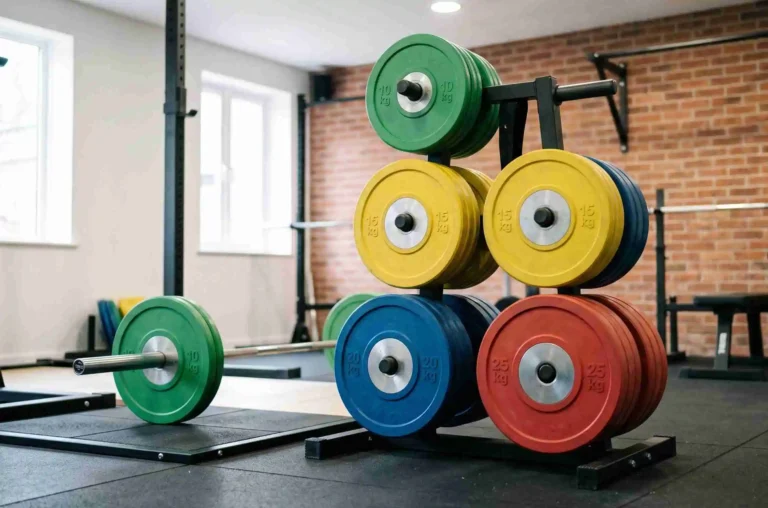
You’ve got a squat rack, a bench, maybe even a decent barbell setup. But every time you want to crank out lateral raises, hammer curls, or a quick burnout set, you’re staring at a gap in your home gym that a full dumbbell rack would fix — if you had the space and a spare $2,000. Most garage gyms don’t have room for 15 pairs of hex dumbbells lined up like soldiers. That’s exactly where the best adjustable dumbbells come in: one compact set that replaces an entire rack and lets you go from pressing heavy to repping light without leaving your lifting platform.
Quick Answer
If you want a fast, reliable adjustable dumbbell that feels like a traditional dumbbell in your hand, the Rep Fitness Quickdraw Adjustable Dumbbells are our top pick. They change weight in seconds, feel balanced during presses and curls, and hold up to serious daily use. They’re ideal for intermediate to advanced lifters who need a broad weight range without cluttering their training space.
TL;DR
Adjustable dumbbells save space and money compared to buying a full set. The Rep Fitness Quickdraw is our best overall for build quality and usability. If you’re on a tighter budget and still want solid performance, the 2026 Updated Adjustable Dumbbell Set of 2 is a strong runner-up.
Key Takeaways
- One set replaces dozens of fixed dumbbells — saving hundreds of dollars and several square feet of floor space.
- Weight-change speed matters — look for a mechanism you can adjust in under 5 seconds so supersets stay intense.
- Build quality separates good from great — cheap adjustable dumbbells wobble, rattle, and eventually break mid-set.
- Consider your actual training style — powerlifters, bodybuilders, and general fitness users each need different weight ranges and increments.
- Check the handle diameter — an oversized or oddly shaped handle will kill your grip comfort on high-rep sets.
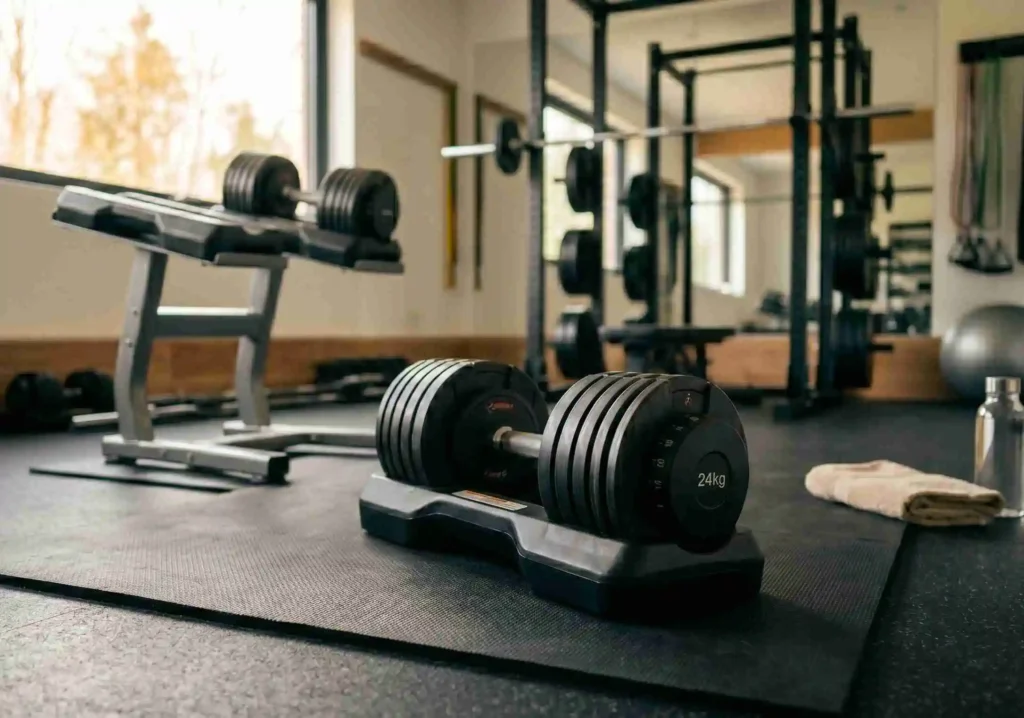
Table of Contents
What to Look For in Adjustable Dumbbells
Weight Range
Think about where you are now and where you’ll be in a year. A set that maxes out at 25 lbs might work for lateral raises today, but you’ll outgrow it fast on rows and presses. Aim for at least a 5–50 lb range per dumbbell if you do any serious strength work.
Adjustment Mechanism
Dial systems, pin selectors, and twist-lock collars each have trade-offs. Dials are fast but can feel fragile. Pins are simple but sometimes finicky. Twist-locks are bombproof but slower. Pick the mechanism that matches your training pace.
Build Quality and Durability
Metal plates and steel handles outlast plastic housings every time. Give the dumbbell a shake — if it rattles at any weight setting, that’s a red flag. You want zero play between the plates and the handle, especially on overhead movements.
Handle Comfort and Knurling
You’ll be gripping this thing for hundreds of reps per week. A handle that’s too thick, too smooth, or weirdly contoured will limit your performance. Medium knurling with a standard ~28mm diameter hits the sweet spot for most lifters.
Increment Size
Small jumps (2.5 lb increments) are a game-changer for progressive overload on isolation exercises. If a set only jumps in 10 lb increments, you’ll hit plateaus fast on movements like flyes and lateral raises.
Footprint and Storage
The whole point is saving space. Measure the cradle or tray that comes with the set and make sure it fits on your shelf, bench, or floor area. Some sets are compact when racked but massive when extended to full weight.
Price per Pound
Adjustable dumbbells range from under $1/lb to over $3/lb. Cheap isn’t always bad, and expensive doesn’t guarantee quality. Compare the total weight you’re getting against the price to find real value.
Common Mistakes When Buying Adjustable Dumbbells
- Buying too light a max weight. You’ll outgrow a 25 lb max in months on compound lifts. The fix: Go for at least 50 lbs per hand unless you only do light rehab work.
- Ignoring the adjustment speed. If it takes 30 seconds to change weight, your rest periods turn into equipment-fiddling sessions. The fix: Test the mechanism (or watch detailed user videos) before buying.
- Choosing based on price alone. The cheapest set on Amazon might wobble, rattle, or snap a selector pin within weeks. The fix: Read long-term user reviews, not just Day 1 unboxing impressions.
- Forgetting about drop safety. Some adjustable dumbbells explicitly warn against dropping. If you train to failure on heavy presses, that’s a problem. The fix: Check the manufacturer’s drop policy and look for reinforced designs.
- Not measuring your space. That compact-looking set might need a 2-foot cradle plus clearance on each side. The fix: Measure your available surface and compare it to the product dimensions before ordering.
- Skipping the handle test. An ergonomic-looking contour grip in photos can feel terrible in a sweaty hand. The fix: Prioritize knurled, straight, or lightly contoured handles over gimmicky shapes.
Our Top Picks
Best Overall: Rep Fitness Quickdraw Adjustable Dumbbells
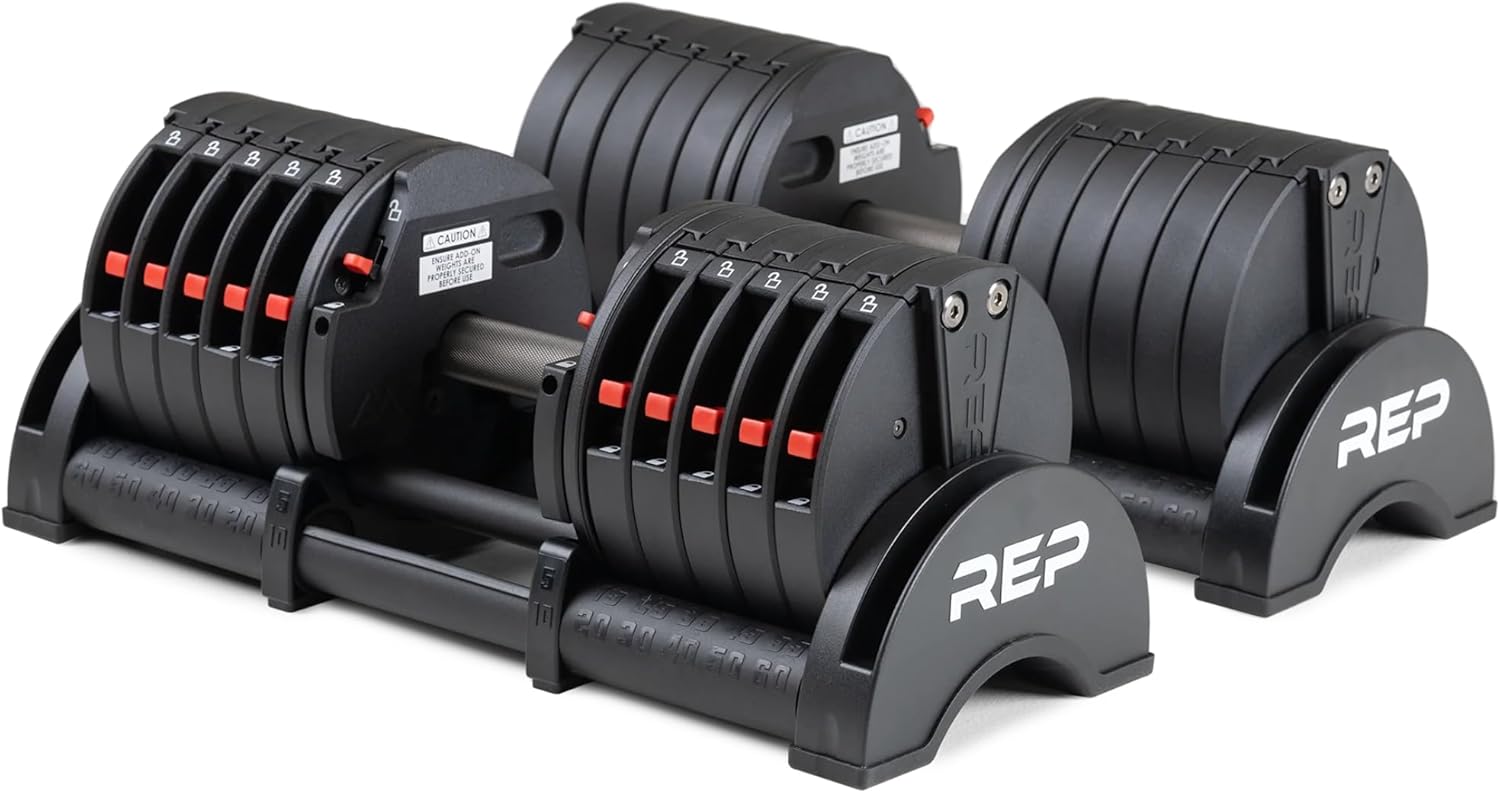
The Rep Fitness Quickdraw Adjustable Dumbbells earned our top spot because they nail the fundamentals: fast weight changes, a balanced feel at every setting, and a build that doesn’t creak or rattle when you’re grinding out a tough set. The quick-draw mechanism lets you swap weight in about two seconds, which is perfect for drop sets or supersets where momentum matters.
They feel noticeably more like a traditional fixed dumbbell than most adjustable sets in this price range. The handle diameter is comfortable for extended sets, and the plates sit tight without any wobble during overhead presses or single-arm rows. The main limitation is the price — they cost more than budget options — and the cradle takes up a bit of shelf space. But if you’re building a serious home gym and plan to use dumbbells almost daily, these pay for themselves fast.
CHECK PRICE ON AMAZON: https://amzn.to/3OBLtMX
Best Budget Pick: 2026 Updated Adjustable Dumbbell Set of 2

The 2026 Updated Adjustable Dumbbell Set of 2 is a solid entry point for home gym owners who want versatile dumbbell training without a premium price tag. You get a pair with enough range for most isolation and moderate compound work, and the adjustment mechanism is straightforward once you get the hang of it.
Where this set shines is value — you’re getting a functional pair of adjustable dumbbells that covers the essentials for bodybuilding-style accessory work, circuit training, and general fitness. The build quality is respectable for the price, though it doesn’t quite match the premium feel of the Rep Fitness set. The handle could be slightly more refined, and advanced lifters may eventually want a heavier max weight. That said, for anyone starting out or on a budget, this set delivers where it counts.
CHECK PRICE ON AMAZON: https://amzn.to/46rFJvq
How to Get the Most Out of Your Adjustable Dumbbells
- Warm up with lighter settings first. Start 10–15 lbs below your working weight for 1–2 warm-up sets. It protects your joints and lets you confirm the mechanism is locked in properly.
- Use them for progressive overload. Track your weights and reps in a log. Even 2.5 lb jumps week to week add up to massive strength gains over a few months.
- Pair them with a solid adjustable bench. An incline bench opens up dozens of exercises — incline presses, chest-supported rows, seated curls — that flat ground work can’t replicate.
- Clean the mechanism monthly. Dust, chalk, and sweat build up inside dial or pin systems. A quick wipe-down with a dry cloth keeps the adjustment smooth and extends the life of the set.
- Don’t drop them. Seriously. Most adjustable dumbbells aren’t built for controlled drops like rubber hex dumbbells are. Set them down firmly but gently, especially on heavy sets.
- Program supersets and drop sets intentionally. The fast adjustment is a feature — use it. Pair a heavy press with a lighter fly, or strip weight for a mechanical drop set without leaving your bench.
- Store them in their cradle after every session. Leaving adjustable dumbbells on the floor invites dust buildup and accidental damage to the selector mechanism.
Space and Setup Considerations
Adjustable dumbbells are one of the most space-efficient upgrades you can make to a home gym. A single pair with its cradle typically takes up about 2 feet of shelf or floor space — compared to the 6–8 feet a full dumbbell rack demands.
Place them on a sturdy surface at about waist height so you’re not bending down to the floor every time you pick them up. A small side table, a shelf on your power rack, or even a dedicated dumbbell stand works great.
Flooring matters less than with a barbell, but rubber mats still protect both your floor and the dumbbells if you set them down firmly between sets. Make sure you have enough overhead clearance for standing presses — at least 8 feet of ceiling height is ideal if you’re pressing overhead while standing.
Ventilation is worth thinking about too. If you’re doing high-rep dumbbell circuits in a small garage gym, things heat up fast. A simple fan pointed at your training area makes a big difference.
Troubleshooting
- Weight plates feel loose or rattle: Check that the selector is fully clicked or dialed into position. If the issue persists, inspect the locking mechanism for debris or wear.
- Adjustment dial is stiff or stuck: Clean around the dial with a dry cloth. Chalk residue and dust are the usual culprits. Avoid WD-40 or liquid lubricants — they attract more grime.
- Handle feels slippery during sweaty sets: Use lifting chalk or a thin pair of training gloves. Wiping the handle between sets with a dry towel also helps.
- One dumbbell feels heavier than the other at the same setting: Confirm both are set to the exact same weight. If they still feel off, check for a plate that didn’t fully seat into position.
- Cradle won’t hold the dumbbells securely: Make sure the cradle is on a level surface. Some cradles have alignment grooves — the dumbbells need to sit flush in those grooves.
Expert Take
Adjustable dumbbells aren’t just a convenience — they’re one of the most effective tools for progressive resistance training at home. According to the American Council on Exercise (ACE), dumbbell training activates more stabilizer muscles than machine-based alternatives, which translates to better functional strength and joint health over time.
The National Strength and Conditioning Association (NSCA) also emphasizes that unilateral dumbbell work (training one arm at a time) helps correct strength imbalances that bilateral barbell movements can mask. For home gym owners who can’t stock a full rack, a quality adjustable set is the most practical way to access the full spectrum of dumbbell training — from 5 lb rehab work to 50+ lb compound lifts — without dedicating an entire wall to storage.
FAQs
Are adjustable dumbbells worth it for a home gym?
Absolutely. They replace 10–15 pairs of fixed dumbbells in a fraction of the space. If you train regularly at home, they’re one of the highest-value investments you can make.
How much weight do I need in an adjustable dumbbell?
For most people, a set that goes up to 50 lbs per hand covers everything from light isolation work to moderate compound lifts. Serious strength athletes may want 70–90 lbs.
Can I drop adjustable dumbbells?
Most models are not designed to be dropped. Set them down firmly and controlled. Dropping them can damage the internal selector mechanism and void your warranty.
How long do adjustable dumbbells last?
A quality set used properly will last 5–10 years or more. The main wear points are the selector mechanism and the handle knurling. Keeping them clean extends their lifespan significantly.
Are adjustable dumbbells safe for heavy pressing?
Yes, as long as the mechanism is fully locked before every set. Always double-check the weight setting before pressing overhead or lying on a bench.
What exercises can I do with adjustable dumbbells?
Nearly everything: presses, rows, curls, flyes, lunges, squats, deadlifts, lateral raises, shrugs, and more. Pair them with an adjustable bench and you’ve got a complete upper-body setup.
Do adjustable dumbbells feel different from fixed dumbbells?
Slightly. Most adjustable sets are a bit longer or bulkier than a fixed dumbbell at the same weight. Premium models like the Rep Fitness Quickdraw minimize this difference.
How do I maintain my adjustable dumbbells?
Wipe them down after each session. Clean the adjustment mechanism monthly with a dry cloth. Store them in their cradle on a level surface. Keep chalk and moisture away from internal moving parts.
Can beginners use adjustable dumbbells?
Absolutely. Start at the lightest setting and work your way up. The small increment options make them ideal for gradual progressive overload, which is exactly what beginners need.
What’s the best surface to use adjustable dumbbells on?
Rubber gym flooring or interlocking foam tiles work well. They protect both the dumbbells and your floor. Avoid using them directly on concrete or hardwood if possible.
Conclusion
Finding the best adjustable dumbbells for your home gym doesn’t have to be complicated. Focus on what matters — weight range, build quality, adjustment speed, and handle comfort — and ignore the flashy marketing. The Rep Fitness Quickdraw Adjustable Dumbbells are our top recommendation because they deliver on all four fronts and feel like real dumbbells in your hands. If budget is the priority, the 2026 Updated Adjustable Dumbbell Set of 2 gives you solid performance at a friendlier price point. Either way, adding a quality set of adjustable dumbbells to your setup opens up dozens of exercises and makes progressive overload simple. Pick the set that fits your training and your space, and start putting them to work.