Affiliate Disclosure: MyHomeGymPro.com is reader-supported. When you buy through links on our site, we may earn an affiliate commission at no extra cost to you. This helps us keep creating honest, in-depth content for home gym owners like you.
You finally built the platform, bolted down the rack, and scored a decent barbell. Then you loaded up your first heavy clean — and the cheap iron plates slammed into your garage floor like a wrecking ball. Cracked concrete. Angry neighbors. A pit in your subfloor you can’t explain to your landlord. If you’re training Olympic lifts, heavy deadlifts, or anything that involves dropping a loaded bar, standard iron plates will destroy your home gym setup. That’s exactly why the best bumper plates exist — and choosing the right set matters more than most lifters realize.
Quick Answer
Bumper plates are rubber-coated Olympic weight plates designed to be dropped from overhead without damaging your floor, your barbell, or the plates themselves. Our top pick is the Fitvids Olympic Bumper Plates Set — it delivers consistent sizing, solid rubber construction, and a reliable fit on any standard Olympic bar, all at a price that won’t gut your home gym budget. If you’re doing any kind of barbell work where the weight might hit the ground, bumper plates are a non-negotiable upgrade.
TL;DR
The Fitvids Olympic Bumper Plates Set is our best overall pick for home gym bumper plates in 2026 — excellent durability, accurate weight tolerance, and great value. For lifters who want a complete barbell-and-plate package, the XMark TEXAS STAR set is a strong runner-up.
Key Takeaways
- Bumper plates protect your floor, barbell, and foundation — iron plates will crack concrete and damage subflooring over time.
- Rubber density and weight accuracy matter more than brand name — cheap plates with loose tolerances throw off your programming.
- Standard Olympic sizing (450mm diameter) keeps the bar at the correct pulling height for deadlifts and Olympic lifts.
- A 160–260 lb set covers most home gym lifters — you can always add pairs later.
- Pair your bumper plates with proper flooring — rubber mats plus bumper plates equal real floor protection.
Table of Contents
What to Look For in the Best Bumper Plates
Rubber Type and Durability
Bumper plates come in crumb rubber, virgin rubber, or urethane. Crumb rubber (recycled) is the most budget-friendly and handles drops well, but it can have a slight odor out of the box. Virgin rubber is denser, more uniform, and lasts longer. Urethane is the premium tier — nearly indestructible, but overkill for most home gyms.
Weight Accuracy (Tolerance)
Cheap plates can be off by 2–5% from their listed weight. That matters when you’re trying to make progressive overload precise. Look for plates with a stated tolerance of ±1% or less. Pick up a kitchen scale and verify when they arrive — it’s worth the 30 seconds.
Diameter Consistency
All bumper plates should be 450mm (17.72 inches) in diameter regardless of weight. This keeps your barbell at the correct height for pulls from the floor. Some budget plates cut corners here, especially on the 10 lb plates. Make sure every plate in your set matches.
Insert Material and Fit
The center insert (the ring that contacts your barbell sleeve) should be stainless steel or brass — not just bare rubber. A solid metal insert prevents the hole from warping after hundreds of loads and drops. It also ensures a snug fit on your Olympic bar without excessive wobble.
Bounce Level
Higher-density rubber bounces less. That sounds minor until you drop a loaded bar and it bounces sideways into your rack or your shin. Low-bounce plates are safer and quieter — both big wins for a home gym environment where you’re probably training in a garage or spare room.
Odor and Off-Gassing
Brand-new rubber plates can smell strong. Crumb rubber tends to be the worst offender. If your gym shares space with living areas, consider plates known for low odor, or plan to air them out in a garage for a few days before bringing them inside.
Price Per Pound
This is the most practical metric. Budget plates run about $1.00–$1.50 per pound. Mid-range quality sits around $1.50–$2.50. Anything over $2.50/lb is competition-grade territory. For most home gym owners, that mid-range sweet spot delivers the best value.
Common Mistakes When Buying Bumper Plates
- Buying mismatched sets from different brands. Different manufacturers use slightly different diameters and thicknesses. Loading a bar with mixed plates creates an uneven pull. The fix: Buy a complete set from one manufacturer.
- Ignoring weight tolerance and trusting the label. A “45 lb” plate that actually weighs 43.5 lb throws off your training over time. The fix: Check reviews for tolerance data or weigh plates yourself when they arrive.
- Choosing the cheapest plates and expecting them to last. Ultra-budget plates crack, chip, and lose chunks within months of heavy use. The fix: Spend slightly more on mid-range plates with solid reviews and at least a 1-year warranty.
- Skipping 10 lb bumper plates. Without bumper 10s, your warm-up sets with lighter weight sit lower than your working sets, changing your pull mechanics. The fix: Make sure your set includes 10 lb bumper plates at full 450mm diameter.
- Forgetting about plate storage. Bumper plates are thicker than iron plates. A full set takes up more rack space than you expect. The fix: Measure your plate storage tree or rack pegs before ordering.
- Not pairing plates with proper flooring. Bumper plates reduce damage, but they don’t eliminate it. Dropping 300+ lbs on bare concrete will still cause problems. The fix: Invest in at least 3/4-inch rubber gym flooring underneath your lifting area.
Our Top Picks for Best Bumper Plates
Best Overall: Fitvids Olympic Bumper Plates Set

The Fitvids Olympic Bumper Plates Set is our top recommendation for home gym owners who want reliable bumper plates without overspending. These plates feature solid rubber construction with stainless steel inserts that fit snugly on any standard 2-inch Olympic barbell. Weight accuracy is solid across the set, and the consistent 450mm diameter means your bar height stays correct from warm-up to working sets.
They handle repeated drops well — the rubber is dense enough to limit excessive bounce, and they hold up over months of regular Olympic lifting and deadlift sessions. The main limitation is a noticeable rubber smell out of the box that takes a few days to air out, and the thinner plates (10 lb) can feel slightly flimsy compared to premium brands. But at this price point, the value is hard to beat for a home gym.
CHECK PRICE ON AMAZON: https://amzn.to/4bcsIs8
Runner-Up: XMark TEXAS STAR Olympic Weight Plate Set with Olympic Bar
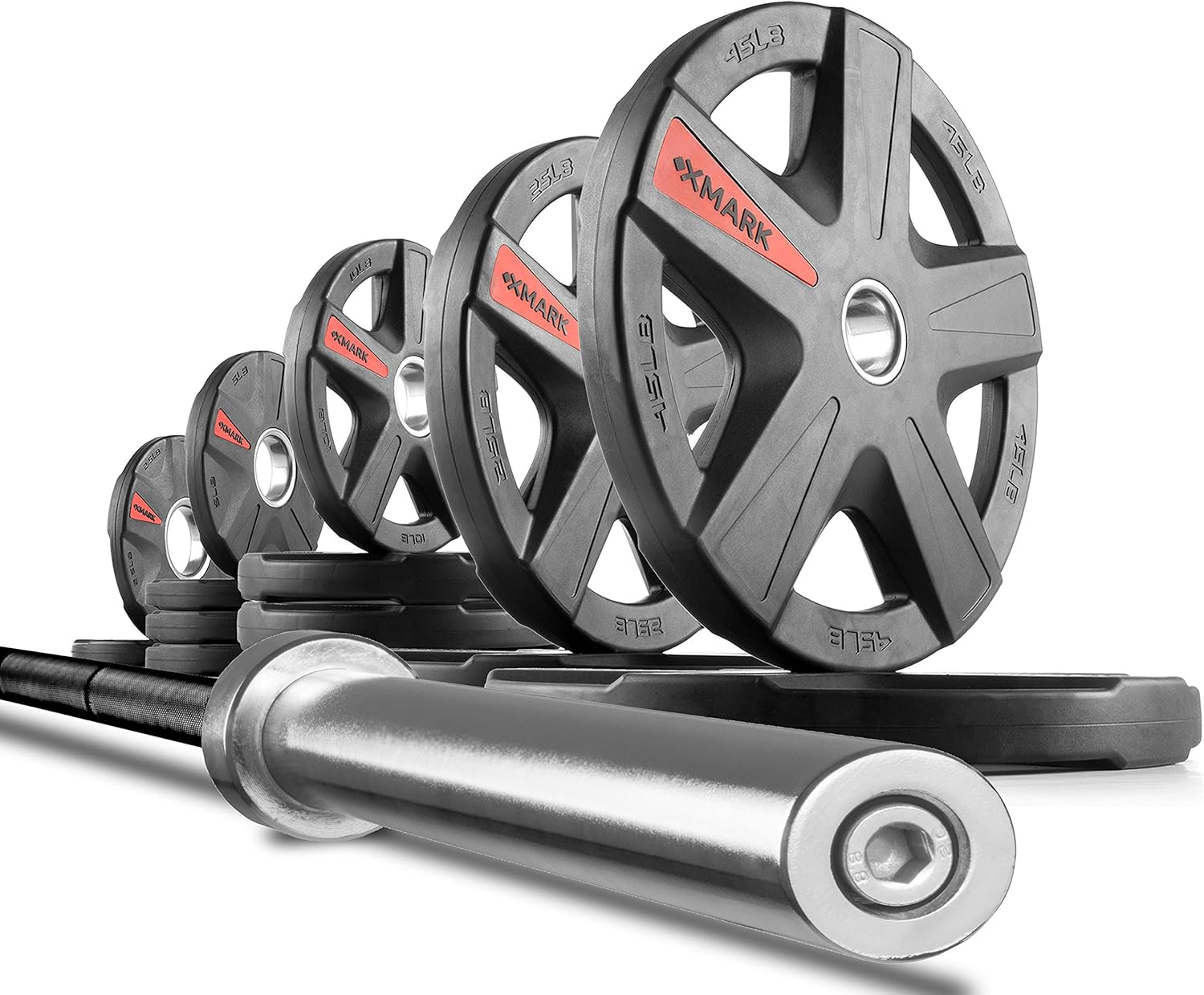
The XMark TEXAS STAR Olympic Weight Plate Set is a smart choice if you’re building your home gym from scratch and want plates and a barbell in one purchase. The set pairs rubber-coated Olympic grip plates with a 7-foot Olympic bar. The tri-grip design makes loading, unloading, and carrying plates way more convenient than smooth-edged alternatives.
These are rubber-coated cast iron — not full bumper plates — so they’re thinner and more compact on the bar. That’s a plus for lifters who need to load heavy and don’t have room for thick bumper plate stacks. The trade-off is they’re not designed for repeated overhead drops the way pure bumpers are. They handle controlled deadlift drops fine, but don’t slam these from overhead on a regular basis. For a general-purpose home gym setup built around squats, bench, and deadlifts, this set covers a lot of ground.
CHECK PRICE ON AMAZON: https://amzn.to/4aG7Ycc
How to Get the Most Out of Your Bumper Plates
- Air them out before your first session. Unwrap the plates and leave them in a well-ventilated area (garage with the door open works great) for 48–72 hours. This kills most of the new-rubber smell.
- Always use collars. Bumper plates fit Olympic bars with a slight gap. Without collars, plates shift during lifts — especially on drops. Spring clips work, but lockjaw-style collars are more secure.
- Load plates evenly. Sounds obvious, but always load equal weight on both sides before unracking. An unbalanced bar tips, and bumper plates make a loaded bar look deceptively light because all plates are the same diameter.
- Rotate your plates. If you have multiple pairs of the same weight, rotate which pair you use. This distributes wear evenly and extends the life of your entire set.
- Clean them periodically. Rubber collects dust, chalk, and garage grime. Wipe plates down with a damp cloth and mild soap every few weeks. This prevents buildup from degrading the rubber surface.
- Store them vertically on a plate tree. Stacking bumper plates flat on the floor warps the lighter ones over time. Vertical storage on a weight tree keeps them flat and organized.
- Don’t mix bumper plates with iron on the same bar for drops. Iron plates are smaller in diameter, so they create uneven stress on the bumper plates during drops. Use all bumpers or all iron — not a mix — when dropping the bar.
Space and Setup Considerations
You don’t need a massive space for a bumper plate setup, but you need to plan it out. A standard Olympic lifting platform is 8 feet by 8 feet — that’s the minimum you should aim for. This gives you room for the loaded barbell plus space to bail safely on a failed lift.
Ceiling height matters if you’re doing overhead work. You need at least 9 feet of clearance to press a barbell overhead without hitting anything. Measure with the bar in your hands and your arms locked out — not just standing height.
Flooring is critical. At minimum, lay down 3/4-inch rubber stall mats (horse stall mats from a farm supply store are the go-to budget option). For Olympic lifting with regular drops, consider building a simple lifting platform with a layer of plywood sandwiched between rubber mats. If you’re looking to set up a complete training area, check out our guide on building a budget home gym for more tips on flooring and layout.
Ventilation matters too. Rubber plates plus a closed garage in summer equals a hot, smelly training environment. A box fan or open door makes a big difference.
A full bumper plate set (260 lbs) fits on a single plate storage tree that takes up about 2 feet by 2 feet of floor space. Budget for that footprint in your layout.
Troubleshooting Common Issues
- Plates smell terrible out of the box → Air them out in a ventilated space for 2–3 days. Wipe with a vinegar-water mix to speed up off-gassing.
- Plates wobble on the bar → Check the center insert for damage. If the fit is loose, switch to tighter-fitting collars. Some bar sleeves are slightly undersized — this is usually a bar issue, not a plate issue.
- Bar bounces and rolls on drops → Your plates may be too high-bounce for your flooring setup. Add thicker rubber mats underneath, or invest in a dead-bounce platform pad.
- Plates cracking or chipping at the edges → This usually happens with ultra-cheap plates or when plates are dropped on uneven surfaces. Ensure your dropping zone is flat and padded.
- Weight doesn’t match the label → Weigh the plates on a bathroom or kitchen scale. If they’re off by more than 2%, contact the seller for a replacement.
- Plates won’t fit on the bar → Confirm your bar is a standard 50mm Olympic sleeve. Some budget barbells have slightly oversized or rough sleeves. Lightly sand any burrs on the bar sleeve if needed.
Expert Take
Bumper plates aren’t just for competitive weightlifters — they’re one of the smartest investments a home gym owner can make. According to the American Council on Exercise (ACE), compound barbell movements like deadlifts, cleans, and snatches are among the most effective exercises for building total-body strength and improving metabolic conditioning. These are all movements where you need the ability to safely drop the bar.
The National Strength and Conditioning Association (NSCA) emphasizes that proper equipment selection directly impacts training safety and long-term adherence. Bumper plates lower the barrier to performing explosive movements at home by removing the fear of floor damage — and when you’re not worried about where the bar lands, your training intensity goes up. For most home gym owners, a quality set of bumper plates paired with a solid Olympic barbell and rubber flooring creates a training setup that rivals most commercial gyms for barbell work.
FAQs
Are bumper plates worth it for a home gym?
Yes. If you do any deadlifts, cleans, or overhead pressing, bumper plates protect your floor and equipment. They’re essential for safe barbell training at home.
Can I use bumper plates for regular bench press and squats?
Absolutely. Bumper plates work for all barbell exercises. The only difference is they’re thicker than iron plates, so you may max out bar sleeve space sooner on very heavy loads.
How much do bumper plates cost?
Budget sets run $1.00–$1.50 per pound. Mid-range quality is $1.50–$2.50 per pound. Competition-grade plates can exceed $3.00 per pound.
Do bumper plates fit all barbells?
Bumper plates fit any standard Olympic barbell with 2-inch (50mm) sleeves. They won’t fit standard 1-inch bars.
How long do bumper plates last?
Quality bumper plates last 5–10+ years with regular use. Cheap plates may crack or chip within the first year, especially with frequent heavy drops.
Are crumb rubber bumper plates good?
Crumb rubber plates are a solid budget option. They handle drops well and are durable. The main downside is a stronger rubber odor compared to virgin rubber plates.
Do I still need gym flooring with bumper plates?
Yes. Bumper plates reduce impact, but they don’t eliminate it entirely. At least 3/4-inch rubber flooring is recommended under your lifting area for full protection.
What weight set should I start with?
A 160 lb set covers most beginners and intermediate lifters. If you’re already squatting or deadlifting over 225 lbs, go for a 230–260 lb set.
Can I drop bumper plates on concrete?
You can, but it’s not ideal. Repeated drops on bare concrete will still damage the floor over time and shorten plate life. Use rubber mats at minimum.
What’s the difference between bumper plates and Olympic plates?
Bumper plates are rubber and designed to be dropped. Traditional Olympic plates are cast iron or steel — more compact but not drop-safe. Both fit Olympic barbells.
Conclusion
If you’re serious about barbell training at home, the best bumper plates turn your garage or spare room into a legit training space. No more tiptoeing around heavy deadlifts or avoiding cleans because you’re scared of cracking the floor. The Fitvids Olympic Bumper Plates Set gives you everything you need — consistent sizing, solid rubber construction, and reliable durability — at a price that makes sense for a home gym budget. If you’d rather grab a full plates-and-barbell package in one shot, the XMark TEXAS STAR set is a convenient all-in-one option. Either way, pair your plates with proper flooring, use collars every session, and train with confidence. Your floor — and your neighbors — will thank you.