Affiliate Disclosure: MyHomeGymPro.com is a participant in the Amazon Services LLC Associates Program. We earn commissions from qualifying purchases at no extra cost to you. All opinions are our own.
You just racked a heavy deadlift, and now you’re stepping backward into a minefield of plates scattered across the floor. A 45 trips you, a 25 rolls under the rack, and somehow a 10-pounder ended up behind the fan. When your training space is a one-car garage or a spare bedroom corner, every square foot matters — and loose plates eat up real estate fast. A solid olympic weight plate tree turns that chaos into an organized, compact setup that actually makes you want to train.
Quick Answer
If you need one recommendation, go with the XMark Commercial Olympic Weight Plate Tree. It holds up to 750 lbs across six pegs, has a rock-solid welded-steel build, and keeps your plates organized without hogging floor space. It’s built for serious home lifters who own a real collection of iron. For a budget-friendly alternative, the CAP A-Frame Olympic Plate Rack handles the job well at a lower price point.
TL;DR
The XMark Commercial is our top pick for heavy-duty plate storage — massive capacity, compact footprint, and commercial-grade steel. If your budget is tighter, the CAP A-Frame gives you solid organization for less money.
Key Takeaways
- Weight capacity matters most. Your plate collection will grow. Choose a tree rated well above your current total.
- Footprint is everything in a home gym. An A-frame or vertical tree design keeps plates accessible without eating floor space.
- Steel gauge and welds determine lifespan. Cheap racks wobble under load. Look for 11-gauge or thicker steel with reinforced welds.
- Peg diameter must match your plates. Olympic plates need 2-inch pegs — standard pegs won’t fit.
- Rubber or plastic peg caps protect your plates and make sliding them on and off smoother.
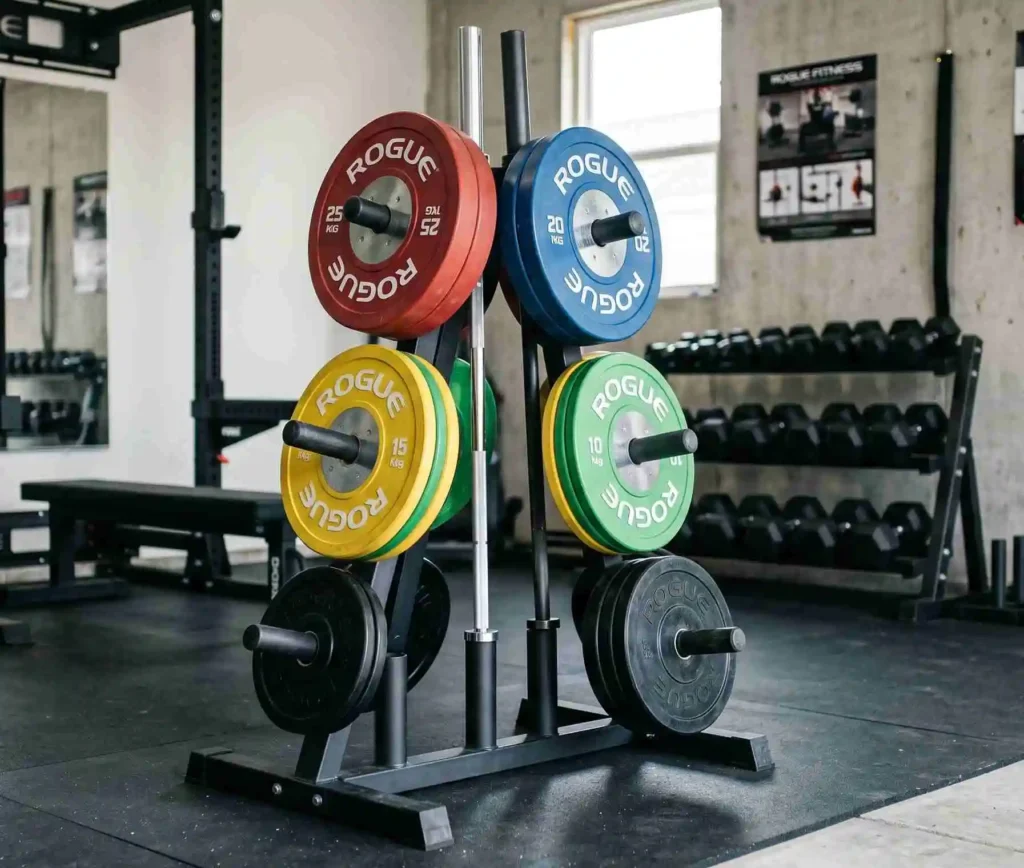
Table of Contents
What to Look For in an Olympic Weight Plate Tree
Weight Capacity
This is the single most important spec. Add up every plate you own, then add 30%. Most lifters underestimate how fast their collection grows once they start buying bumpers or calibrated plates. A tree rated for 500+ lbs gives you breathing room.
Steel Gauge and Construction
The frame needs to handle hundreds of pounds without wobbling or tipping. Look for 11-gauge or 12-gauge steel minimum. Welded joints are stronger than bolt-together designs. If the listing doesn’t mention steel gauge, that’s usually a red flag.
Peg Count and Layout
More pegs mean better organization. Six to eight pegs let you separate plates by weight — 45s on the bottom, 25s in the middle, 10s and 5s up top. Some trees also include a bar holder, which is a nice bonus if you’re short on wall space.
Footprint and Design
A-frame designs spread the load across a wider base and are naturally more stable. Vertical single-post trees save floor space but can get top-heavy. Measure your available space before buying. Most plate trees sit within a 24″ × 24″ footprint, but some A-frames stretch to 30″ wide.
Peg Diameter
Olympic plates have a 2-inch hole. Make sure the pegs measure roughly 1.9″ to 2″ in diameter. Some budget racks ship with undersized pegs that let plates rattle and slide.
Floor Protection
Look for rubber or plastic feet on the base. A 500-lb loaded tree on concrete will scratch and chip without them. Some models also include rubber peg sleeves that protect plate finishes and reduce noise.
Ease of Loading and Unloading
Angled pegs make sliding heavy plates on and off much easier than straight horizontal pegs. This matters more than you’d think at 5 AM when you’re loading up for squats.
Common Mistakes When Buying an Olympic Weight Plate Tree
- Buying based on price alone. Cheap trees wobble under 300 lbs and tip when you pull a plate from one side. The fix: Spend the extra $30–50 for commercial-grade steel and welded construction.
- Ignoring peg diameter. Standard pegs (1-inch) won’t fit Olympic plates. The fix: Confirm the listing specifies 2-inch or “Olympic” pegs before checkout.
- Underestimating your plate collection. You have 300 lbs today, but you’ll have 500 in a year. The fix: Buy a tree rated for at least 150% of your current total plate weight.
- Forgetting about ceiling height. Tall vertical trees loaded with plates can exceed 5 feet. The fix: Measure your ceiling and any overhead obstacles before ordering.
- Skipping floor protection. A loaded plate tree concentrates hundreds of pounds on a few small contact points. The fix: Place the tree on a rubber gym mat or horse stall mat.
- Not checking the base width. An A-frame that’s 30 inches wide might not fit between your rack and the wall. The fix: Measure the exact gap and compare to the product dimensions.
Our Top Picks
Best Overall: XMark Commercial Olympic Weight Plate Tree

The XMark Commercial Olympic Weight Plate Tree is the rack you buy once and never think about again. Built from heavy-gauge welded steel, it holds up to 750 lbs across six Olympic-sized pegs. That’s enough for a serious plate collection — bumpers, iron, competition discs, all of it. The compact vertical design keeps everything in roughly a 2-foot square footprint, which is ideal for tight garage setups.
The angled pegs make loading and unloading plates easy even when the tree is stacked heavy. Rubber end caps protect both the pegs and your plates from scratching. The wide base stays planted and doesn’t wobble, even when loaded unevenly. It also includes a bar holder on top, saving you from leaning barbells against the wall.
The only real downside is the weight of the tree itself — it’s heavy to move once assembled. And at its price point, it costs more than basic options. But for a plate tree that matches the quality of your other commercial-grade home gym equipment, it’s worth the investment.
CHECK PRICE ON AMAZON: https://amzn.to/3Mra6eN
Best Budget Pick: CAP A-Frame Olympic Plate Rack

The CAP A-Frame Olympic Plate Rack is a solid entry-level option for home gym owners who need organized plate storage without spending top dollar. The A-frame design provides a naturally stable base, so it won’t tip even if you load one side heavier than the other. It accommodates Olympic-sized plates on multiple pegs, giving you enough room to separate weights by size.
The steel construction is decent for the price, and the powder-coat finish resists rust in humid garage environments. It’s lighter and easier to move than commercial-grade trees, which can be a plus if you rearrange your space regularly.
Where it falls short is max capacity — it won’t hold as much total weight as the XMark, and the pegs can feel slightly loose under very heavy loads. If your collection tops 400+ lbs, you may outgrow it. But for most home lifters building their setup, it’s a smart starting point.
CHECK PRICE ON AMAZON: https://amzn.to/4tSP35k
How to Get the Most Out of Your Plate Tree
- Load heaviest plates on the bottom. This lowers the center of gravity and prevents tipping. Always put 45s on the lowest pegs.
- Organize by weight, not convenience. Dedicate each peg to a specific plate size. It takes two extra seconds but keeps your sessions flowing.
- Re-rack plates immediately after every set. It sounds obvious, but discipline here keeps your gym clean and prevents tripping hazards.
- Bolt it down if possible. If your tree sits on concrete, consider anchoring the base with lag bolts. A fully loaded tree that tips over can cause serious damage or injury.
- Wipe down pegs monthly. Dust and chalk build up on pegs and make plates harder to slide. A damp rag once a month keeps everything smooth.
- Distribute weight evenly across sides. Don’t stack 400 lbs on one side and leave the other empty. Balanced loading extends the life of the frame and welds.
- Use rubber peg sleeves if your tree didn’t include them. They’re cheap on Amazon and protect both the pegs and your plate finishes.
Space and Setup Considerations
Most olympic weight plate trees need a floor area of about 24″ × 24″ to 30″ × 30″. That sounds small, but remember you also need clearance to slide plates on and off — plan for at least 18 inches of open space on each side of the pegs.
Place your tree within arm’s reach of your power rack or lifting platform. The closer it is to where you actually train, the more likely you are to re-rack plates between sets. A corner spot works well for most garage gyms.
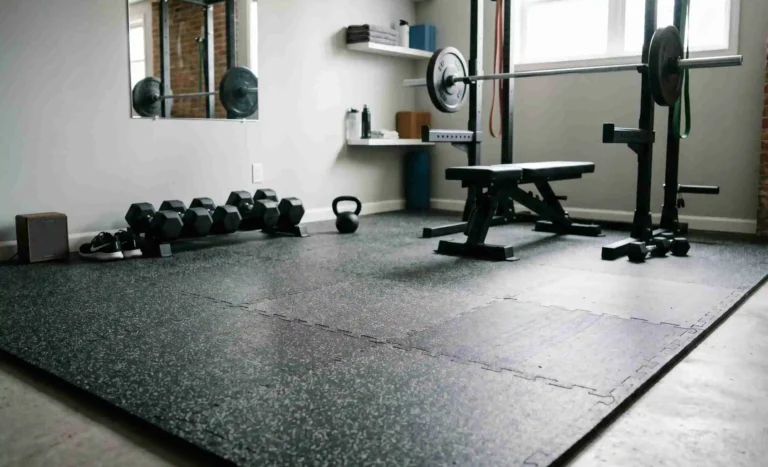
Flooring matters. A loaded plate tree on bare concrete can scratch the floor and vibrate during heavy deadlift sessions nearby. A 3/4-inch rubber gym mat underneath absorbs vibration and protects both the floor and the tree’s base.
Ceiling height is rarely an issue with plate trees, but vertical models loaded with plates can reach 55–60 inches tall. If you train in a low-ceiling basement, measure before you buy.
Troubleshooting Common Issues
- Tree wobbles when loaded → Check that all bolts are fully tightened. If it’s a welded frame, the floor might be uneven — slide a rubber shim under the short leg.
- Plates are hard to slide on/off → Clean the pegs with a damp cloth. If pegs are bare metal, add rubber sleeves for smoother action.
- Tree tips when you remove a heavy plate → You’re loading unevenly. Redistribute weight so both sides are roughly balanced before pulling plates.
- Rust forming on pegs or frame → Wipe down with a light coat of 3-in-1 oil. Store the tree away from open garage doors where rain can blow in.
- Pegs feel loose or wobbly → Check if the pegs are bolt-on or welded. Bolt-on pegs can loosen over time — retighten with a wrench every few months.
- Plates rattle and make noise → Slightly undersized pegs cause this. Add a thin rubber sleeve or wrap electrical tape around the peg base to snug up the fit.
Expert Take
According to the American Council on Exercise (ACE), maintaining an organized training environment directly impacts workout consistency and adherence. When your gym feels cluttered and chaotic, you’re more likely to skip sessions. A plate tree isn’t just about tidiness — it’s a behavioral tool that removes friction between you and your next workout.
The National Strength and Conditioning Association (NSCA) also emphasizes proper equipment storage as a safety standard in facility design. Loose plates on the ground are a genuine injury risk, especially during compound movements where your focus is on the barbell, not the floor. For home gym owners training solo without a spotter, keeping plates racked and off the ground is a basic safety practice that’s easy to overlook.
FAQs
What is an olympic weight plate tree?
It’s a vertical or A-frame storage rack with 2-inch pegs designed to hold Olympic weight plates upright and organized. It keeps your gym floor clear and your plates easy to access.
How much weight can a plate tree hold?
Most quality plate trees hold 400–750 lbs. Commercial-grade options like the XMark handle 750 lbs, while budget models typically max out around 300–400 lbs.
Can I store bumper plates on a plate tree?
Yes. Bumper plates have standard Olympic 2-inch holes and fit on any Olympic plate tree. Just note that bumpers are thicker, so each peg holds fewer plates.
Do plate trees work on rubber gym flooring?
Absolutely. Rubber flooring actually helps by preventing the tree from sliding and absorbing vibration. It’s the recommended surface for any loaded plate storage.
What’s the difference between an A-frame and a vertical plate tree?
A-frame designs have a wider base and are naturally more stable. Vertical trees save floor space but can wobble under heavy, uneven loads. Both work well for home gyms.
How do I prevent my plate tree from tipping over?
Load the heaviest plates on the lowest pegs, distribute weight evenly across sides, and consider bolting the base to the floor if you have a concrete surface.
Should I get a plate tree with a barbell holder?
If you don’t have wall-mounted barbell storage, a tree with a built-in bar holder is a great space saver. It keeps your bar off the floor and out of the way.
Are plate trees hard to assemble?
Most assemble in 15–30 minutes with basic tools. Welded frames have fewer parts and are typically sturdier. Bolt-together models take slightly longer but allow disassembly for moving.
Can I use a plate tree for standard (1-inch) plates?
No. Olympic plate trees have 2-inch pegs. Standard plates require a different rack with 1-inch pegs. Make sure you match the peg size to your plate type.
Where should I place my plate tree in a home gym?
Within arm’s reach of your power rack or lifting platform. A corner placement works best for most garage gyms, leaving the center of the room open for training.
Conclusion
A quality olympic weight plate tree is one of those purchases that quietly upgrades your entire training experience. No more tripping over loose plates, no more wasted time hunting for the right weight, and no more scratched floors. The XMark Commercial Olympic Weight Plate Tree is our top recommendation — it’s built to hold a serious collection, keeps a compact footprint, and is tough enough to last for years. If you’re working with a tighter budget, the CAP A-Frame Olympic Plate Rack gets the job done without breaking the bank. Either way, getting your plates off the floor is one of the simplest upgrades you can make. Pick the one that fits your space and your collection, and enjoy a gym that actually feels like a gym.