Affiliate Disclosure: MyHomeGymPro.com earns a commission from qualifying purchases through the affiliate links in this article, at no extra cost to you. We only recommend products we genuinely believe in.
You’ve finally carved out a corner of the garage for your home gym. The barbell’s loaded, the bench is solid, and you’re making real progress. But every time you need dumbbells for accessory work — lateral raises, curls, single-leg RDLs — you’re digging through a pile of mismatched weights scattered across the floor. It’s a mess, it kills your momentum between sets, and honestly, it’s a safety hazard. A proper dumbbell rack with weights solves all of that in one purchase.
Quick Answer
A dumbbell rack with weights is a bundled set that gives you a complete range of dumbbells plus a dedicated storage rack, saving you money compared to buying each piece separately. Our top pick is the RITFIT 180-780LB Rubber Hex Dumbbells — it delivers rubber-coated hex dumbbells with a sturdy steel rack at a price point that undercuts most competitors. It’s ideal for home gym owners who want a clean, organized setup without spending thousands.
TL;DR
The RitFit Rubber Hex Dumbbell set bundles quality dumbbells and a solid rack into one affordable package. If you need a full weight range without cluttering your floor, this is the smartest move for your budget.
Table of Contents
Key Takeaways
- Bundled sets save 20–40% compared to buying dumbbells and a rack separately.
- Rubber hex heads protect your floors and stay put when set down.
- A dedicated rack keeps your gym organized and reduces injury risk from tripping over loose weights.
- Look for welded (not bolted) rack construction for long-term durability.
- Match your weight range to your training level — beginners can start lighter, but most lifters outgrow small sets fast.
What to Look For in a Dumbbell Rack with Weights
Weight Range
This is the single most important factor. A set that only goes up to 25 lbs will leave most lifters frustrated within months. For general strength training, look for sets that reach at least 50 lbs per dumbbell. Serious lifters should aim for sets topping out at 80 lbs or higher.
Dumbbell Coating
Rubber-coated dumbbells protect your floors, reduce noise, and resist rust. Chrome or bare iron dumbbells are cheaper but will scratch concrete and dent hardwood. Rubber hex designs also prevent rolling, which matters more than you think when you set them down between sets.
Rack Construction
A flimsy rack defeats the purpose. Look for heavy-gauge steel with welded joints rather than bolt-together assembly. The rack should feel rock-solid when loaded. Wobbly racks are a liability, especially when you’re pulling a 60 lb dumbbell off the top tier.
Weight Increment Jumps
Five-pound jumps (5, 10, 15, 20…) are standard and work for most people. Some sets offer 2.5 lb increments on the lighter end, which is useful for shoulder and isolation work. Bigger jumps save money but can stall your progressive overload on smaller lifts.
Footprint
Measure your available space before buying. A three-tier rack holding 5–50 lb dumbbells typically takes up about 4 feet wide by 2 feet deep. Vertical or A-frame designs save floor space but usually hold fewer pairs.
Dumbbell Head Shape
Hex (six-sided) heads are the gold standard for home gyms. They don’t roll, they sit flat for renegade rows and push-up variations, and they stack neatly on a rack. Round heads roll off surfaces and are a genuine nuisance in tight spaces.
Total Set Weight vs. Usable Weight
Marketing loves to splash “780 LBS!” on the listing. But that total weight includes every dumbbell in the set. What matters is the range and individual dumbbell weights you actually get. Read the spec sheet, not just the headline number.
Common Mistakes When Buying a Dumbbell Rack with Weights
- Buying too light a set. Most people outgrow a 5–25 lb set within six months. The fix: invest in a range that goes to at least 50 lbs from the start.
- Ignoring the rack quality. The dumbbells might be great, but a cheap rack bends under load. The fix: check the rack’s weight capacity and look for welded steel construction.
- Forgetting about floor space. A 10-pair set with rack is bigger than you think. The fix: measure your space and compare it to the rack’s listed dimensions before ordering.
- Skipping rubber coating to save money. Bare iron dumbbells damage floors and rust in garages. The fix: spend the extra 15–20% on rubber-coated sets. Your floors and ears will thank you.
- Assuming all “hex” dumbbells are the same. Some brands use low-grade rubber that peels or stinks for weeks. The fix: read recent reviews specifically about rubber quality and odor.
- Not checking the weight increments. A set that jumps from 30 to 50 lbs leaves a frustrating gap. The fix: verify every pair included in the set matches your training needs.
Our Top Picks
Best Overall: RITFIT 180-780LB Rubber Hex Dumbbells

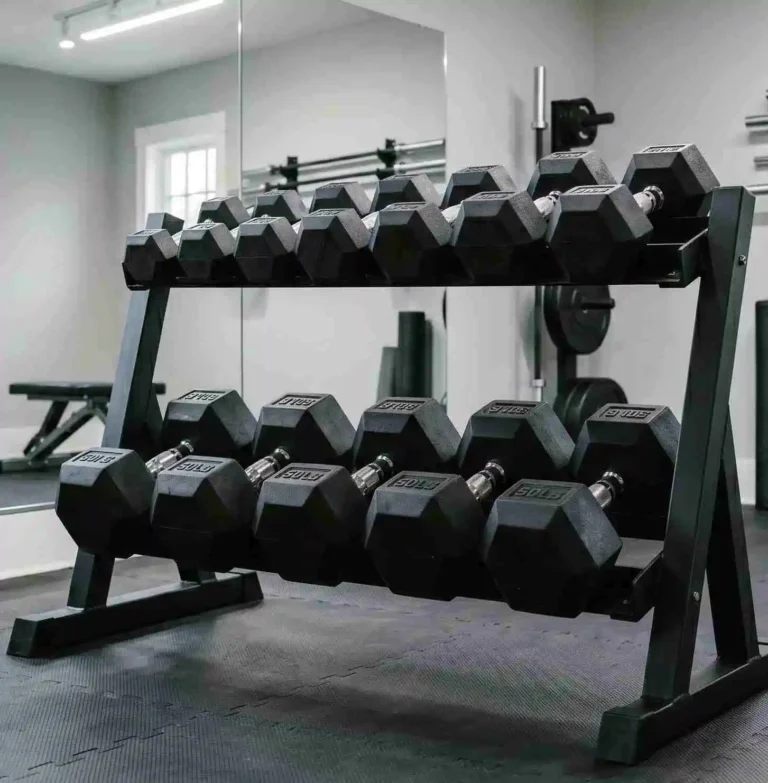
The RITFIT 180-780LB Rubber Hex Dumbbells set is our top choice for home gym owners who want a comprehensive dumbbell collection without breaking the bank. You get rubber-coated hex dumbbells across a wide weight range, all sitting on a heavy-duty steel rack that keeps everything organized. The rubber coating protects floors and dampens noise — critical if your gym shares a wall with a bedroom.
The hex shape means these dumbbells stay exactly where you put them, and the knurled chrome handles provide solid grip even when your palms get sweaty. The included rack is sturdy enough to handle the full load without wobbling.
One honest note: with a set this size, delivery can be a headache. These are heavy, and you’ll want to plan for getting them from your front door to your gym space. The rubber also has a mild factory smell when new, but it fades within a week or two.
CHECK PRICE ON AMAZON: https://amzn.to/4scUQBr
Runner-Up: RitFit 5-780LBS Rubber Coated Hex

The RitFit 5-780LBS Rubber Coated Hex set is a strong alternative, especially if you want lighter starting weights in your collection. This set starts at 5 lbs, making it a better fit for households where multiple people train — including beginners who need those lighter dumbbells for rehabilitation exercises, warm-ups, or high-rep isolation work.
Like the top pick, you get rubber hex construction and a matching storage rack. The build quality is comparable, and the rubber coating is durable enough for daily use. Where this set edges ahead is versatility — that 5 lb starting point means you’re covered from physical therapy-level weights all the way up to heavy pressing.
The trade-off is that more pairs means more rack space. Make sure your gym area can handle the larger footprint before ordering.
CHECK PRICE ON AMAZON: https://amzn.to/4tQbQyH
How to Get the Most Out of Your Dumbbell Rack with Weights
- Organize by weight, not by convenience. Put the lightest dumbbells on the top tier and the heaviest on the bottom. This prevents the rack from being top-heavy and makes grabbing heavy dumbbells safer.
- Always re-rack immediately. Dumbbells left on the floor are trip hazards. Build the habit of putting them back between every set. It takes three seconds and saves you from a rolled ankle.
- Wipe down handles weekly. Sweat corrodes knurling over time. A quick wipe with a dry towel after each session keeps the grip texture intact for years.
- Use progressive overload intentionally. Don’t just grab the same dumbbells every session. Track your weights in a notebook or app and aim to move up by one increment every 2–3 weeks on each lift.
- Rotate your exercises. A full dumbbell set opens up dozens of movements you can’t do with a barbell alone. According to the American Council on Exercise (ACE), dumbbell training improves muscular balance and joint stability because each arm works independently.
- Level the rack on uneven floors. Garage floors slope. Use rubber shims or anti-vibration pads under the rack legs to keep it perfectly level. A tilted rack is an accident waiting to happen.
- Don’t drop rubber hex dumbbells from height. Rubber-coated dumbbells are durable, but repeatedly slamming them from overhead can crack the rubber and damage the internal attachment. Control the eccentric on every rep.
Space & Setup Considerations
A standard three-tier dumbbell rack with a 10-pair set needs roughly 50 inches of width, 24 inches of depth, and 36 inches of height. Add at least 3 feet of clearance in front for safe access, and 2 feet on each side so you’re not squeezing between the rack and a wall.
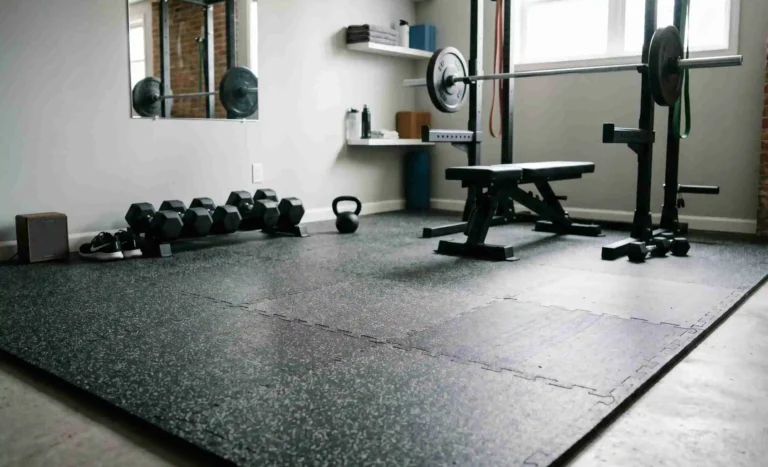
Flooring matters. Even with rubber-coated dumbbells, placing your rack on bare concrete invites micro-scratches and amplifies noise. A set of interlocking rubber gym tiles (at least 3/4-inch thick) under and around your rack area solves both problems for around $50–$80.
If you’re setting up in a garage, keep the rack away from exterior walls that get direct sunlight. Heat can soften rubber coating over time, and temperature swings cause condensation that leads to rust on exposed metal parts.
Troubleshooting
- Rack wobbles when loaded → Check that all feet are making full contact with the floor. Use rubber shims to level it. If the wobble persists, tighten any bolts and inspect for bent frame sections.
- Rubber smell is overwhelming → Leave the dumbbells in a ventilated area (open garage, near a fan) for 3–5 days before bringing them into an enclosed space. The off-gassing is harmless but unpleasant.
- Dumbbell handles feel slippery → Wipe with a dry towel first. If the knurling is smooth from wear, use lifting chalk or apply grip tape designed for barbells.
- Rubber coating is peeling → This usually means a manufacturing defect. Contact the seller within the warranty period. Avoid using solvents or harsh cleaners on rubber-coated dumbbells, as they accelerate peeling.
- Rack paint chipping where dumbbells sit → Normal wear. Touch up with a rust-inhibiting spray paint to prevent corrosion underneath.
Expert Take
For most home gym owners, a complete dumbbell set with rack is the single best investment after a barbell and squat rack. The National Strength and Conditioning Association (NSCA) consistently highlights dumbbell training as essential for unilateral strength development, which corrects the left-right imbalances that barbell-only training can mask.
From a practical standpoint, having a full range of dumbbells on a dedicated rack eliminates the biggest friction point in home training: setup time. When your dumbbells are organized and within arm’s reach, you move through supersets and accessory work faster, which means more training volume in less time. That efficiency compounds over months and years of consistent training.
FAQs
Is it cheaper to buy a dumbbell rack with weights as a set?
Almost always, yes. Bundled sets typically cost 20–40% less than purchasing each dumbbell pair and a rack individually. The savings increase with larger sets.
What weight range should a beginner get?
A 5–50 lb set covers most beginners for the first 1–2 years. If you’re already experienced with compound lifts, consider starting at 10–70 lbs or higher.
Do rubber hex dumbbells damage hardwood floors?
Rubber coating significantly reduces the risk, but dropping heavy dumbbells from height can still dent hardwood. Use rubber flooring tiles underneath for extra protection.
How much floor space does a dumbbell rack need?
Plan for about 4 feet wide by 2 feet deep for the rack itself, plus 3–4 feet of clearance in front for safe access and exercise room.
Can I add more dumbbells to the rack later?
It depends on the rack’s capacity. Some racks have empty slots for future additions. Check the rack’s total weight limit and available tier space before assuming you can expand.
Are rubber hex dumbbells good for home gyms?
Yes. Hex shapes prevent rolling, rubber protects floors, and they’re quieter than iron. They’re widely considered the best dumbbell style for residential use.
How do I get rid of the rubber smell on new dumbbells?
Leave them in a well-ventilated area for 3–7 days. A fan or open garage speeds up the off-gassing process. The smell is temporary and non-toxic.
Should I get adjustable dumbbells or a fixed set with rack?
Fixed sets are faster to use and more durable. Adjustable dumbbells save space but are slower to change weights and have mechanical parts that can wear out. For a dedicated home gym, fixed sets win.
What’s the best flooring under a dumbbell rack?
Interlocking rubber gym tiles, at least 3/4-inch thick. They protect your subfloor, reduce noise, and give the rack a stable, level surface.
How long do rubber hex dumbbells last?
With normal use, quality rubber hex dumbbells last 10–20 years. The rubber may show cosmetic wear, but the structural integrity holds up for decades.
Conclusion
Building a home gym that actually works means having the right dumbbells within reach — organized, ready to go, and covering enough weight range to challenge you as you get stronger. A quality dumbbell rack with weights eliminates the clutter, the guesswork, and the nickel-and-diming of buying individual pairs over time.
The RITFIT 180-780LB Rubber Hex Dumbbells set gives you everything in one shot: durable rubber-coated dumbbells, a solid rack, and a price that makes sense for a home gym budget. If you need lighter weights in the mix, the RitFit 5-780LBS Rubber Coated Hex set extends the range down for more versatile household use.
Stop tripping over loose dumbbells. Get your set, organize your space, and focus on what actually matters — the training.
CHECK PRICE ON AMAZON: https://amzn.to/4scUQBr