Affiliate disclosure : When you buy through links on this page, we may earn a small commission at no extra cost to you. We only recommend gear we’d use (or have used) ourselves.
You’ve got four 45s leaning against the squat rack, a pair of 25s half-buried under the bench, and you just rolled your ankle on a stray 10 walking to the water bottle. Sound familiar? A dedicated olympic weight plate tree fixes all of that for less than the cost of a decent pair of shoes — but most lifters overpay because they assume “cheaper” means “wobbly scrap metal.” It doesn’t. The right budget pick is built like a tank, stores every plate you own, and leaves room for the barbell too.
Quick Answer
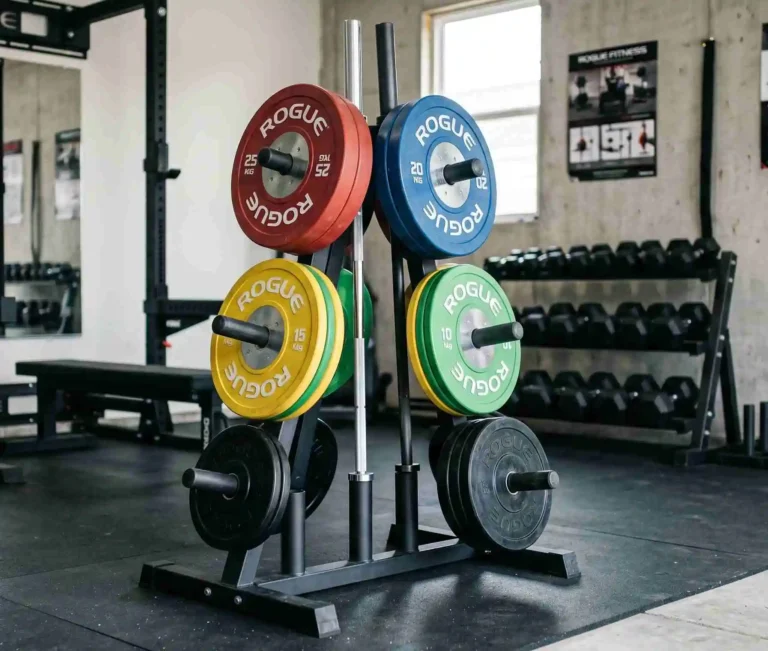
A budget olympic weight plate tree is a compact, vertical (or A-frame) rack with 2-inch posts that holds your bumpers and iron plates off the floor. Our top budget pick is the CAP A-Frame Olympic Plate Rack — it’s stable, holds up to roughly 500 lb across six posts, and costs a fraction of commercial-grade trees. It’s ideal for garage lifters running a standard 300–500 lb plate collection who want order without a premium price tag.
TL;DR
The CAP A-Frame punches way above its price — sturdy welds, smart low-profile design, and enough posts for a full plate set. Spend more only if you own 700+ lb of plates or want bar storage built in.
Table of Contents
Key Takeaways
- A good olympic weight plate tree cuts floor clutter and protects your plates from chips and cracks.
- Look for a 2-inch post diameter, at least 4–6 posts, and a welded (not bolted) base.
- The CAP A-Frame is the best value pick under most budgets — stable, compact, and honest with its specs.
- Upgrade to a commercial-grade tree like the XMark only if you have heavy plate collections or need integrated bar holders.
- Floor flatness and rubber matting matter more than most people think for long-term stability.
What to Look For in an Olympic Weight Plate Tree
Post Diameter and Length
Olympic plates have a 2-inch center hole, so your posts must match. Anything narrower is a standard 1-inch rack — wrong tool. Longer posts hold more plates, but they also stick out farther, so measure your walking lane before you buy.
Number of Posts
Six posts is the sweet spot for most home gyms. You’ll want dedicated posts for 45s, 35s, 25s, 10s, 5s, and change plates. Fewer posts force you to stack mixed sizes, which defeats the point of having a tree.
Weight Capacity
Check the total capacity and the per-post capacity. A tree rated “500 lb total” might only allow 100 lb per post — fine for small plates, not fine for four 45s on one peg. Heavier collections need commercial-rated trees.
Base Footprint and Stability
A wider base is more stable but eats more floor. A-frame designs distribute weight low and wide, which is why they tend to feel rock-solid even when lightly loaded. Upright trees look compact but can get tippy if you only load one side.
Build Quality
Look for fully welded joints, powder-coated steel, and rubber feet or end caps. Bolted-together bases loosen over time and start to squeak. Gauge of steel matters too — 11-gauge or thicker is ideal for any tree holding real weight.
Bar Storage
Some trees include vertical bar holders. It’s a nice touch if you own one bar. If you’ve got a power bar, a deadlift bar, and a junior bar, you probably need a separate gun rack anyway.
Footprint vs. Plate Collection
Be honest about your plate count. A six-post tree looks great empty but fills up fast if you own 600+ lb in bumpers. Measure the diameter of your thickest bumper stack before buying.
Common Mistakes When Buying a Plate Tree
- Buying a 1-inch post rack by accident. The fix: Confirm “2-inch Olympic” in the listing before clicking buy. Double-check the spec sheet, not the title.
- Underestimating how much space plates take. The fix: A 45 lb bumper is roughly 3 inches thick. Six of them on one post is 18+ inches. Plan your footprint accordingly.
- Ignoring weight capacity per post. The fix: Divide your heaviest single-plate-size collection by post count. If it exceeds the rating, size up.
- Skipping a rubber mat underneath. The fix: A 4′ x 6′ horse-stall mat under the tree protects your floor when loading and unloading plates.
- Buying too compact a tree. The fix: Leave at least 18 inches of walking clearance on the loading side. You’ll thank yourself when carrying a 45 in each hand.
- Mixing plate sizes on one post to save money. The fix: Buy the right tree the first time. Mixed stacking is a shin-banger and slows every session down.
- Forgetting about ceiling and wall clearance. The fix: Vertical trees can run 40+ inches tall. Check clearance if it lives under a basement beam or garage shelf.
Our Top Picks
After sorting dozens of plate trees by price, footprint, and real user reports, two rise to the top for serious home gym owners. One is the honest budget winner — the CAP A-Frame. The other is the upgrade you step to when your plate collection outgrows entry-level gear.
Best Budget: CAP A-Frame Olympic Plate Rack
If you’ve been stacking plates against the wall and praying they don’t fall on the dog, this is the fix. The CAP A-Frame’s low, wide stance keeps it planted even when you load one side first — a weak spot on cheaper upright designs.

The CAP A-Frame Olympic Plate Rack is purpose-built for the average home gym owner running a 300–500 lb plate collection. The six 2-inch posts give you dedicated slots for every plate size, and the welded A-frame base keeps the whole unit stable without bolting it to the floor. You get powder-coated steel, thoughtful post spacing, and a footprint that tucks neatly against a wall or behind a rack. The trade-offs: it doesn’t include a barbell holder, and the post length can feel tight if you own deep bumper stacks of a single size. But for the price, the value is hard to beat.
CHECK PRICE ON AMAZON: https://amzn.to/4tSP35k
Premium Upgrade: XMark Commercial Olympic Weight Plate Tree
Some lifters need more. If you’ve got a heavy bumper collection, train explosively, or just want a tree that will still look new in ten years, the step up is worth considering.

The XMark Commercial Olympic Weight Plate Tree is commercial-grade steel in a home-friendly footprint. You get a heavier gauge frame, longer posts than most budget trees, and integrated vertical barbell holders so you can finally stop leaning your power bar in the corner. It’s ideal for lifters with deep plate collections (600+ lb), anyone running a semi-public garage gym, or buy-once-cry-once shoppers. The honest limitations: it costs noticeably more than the CAP, and the larger footprint means it’s not ideal for tiny basement setups. But if you’re tired of replacing cheap gear, this is the one you keep.
CHECK PRICE ON AMAZON: https://amzn.to/3Mra6eN
How to Get the Most Out of Your Plate Tree
- Load heavy plates low. Put your 45s on the lower posts. It drops the center of gravity and makes the whole tree more stable.
- Dedicate one post per plate size. No mixing. You’ll load and unload bars twice as fast.
- Add rubber matting underneath. Protects the floor when plates drop during loading, and dampens metal-on-concrete noise.
- Leave loading clearance. At least 18 inches on the primary loading side. More if you’re tall or carry two plates at a time.
- Wipe plates before racking. Chalk dust and sweat can etch powder coating over months of loading.
- Check the welds monthly. A quick visual on a budget tree catches any stress cracks early. Not common, but worth the 30 seconds.
- Don’t use it as a bench. Sitting on the top rail (yes, people do this) will warp posts over time.
Space & Setup Considerations
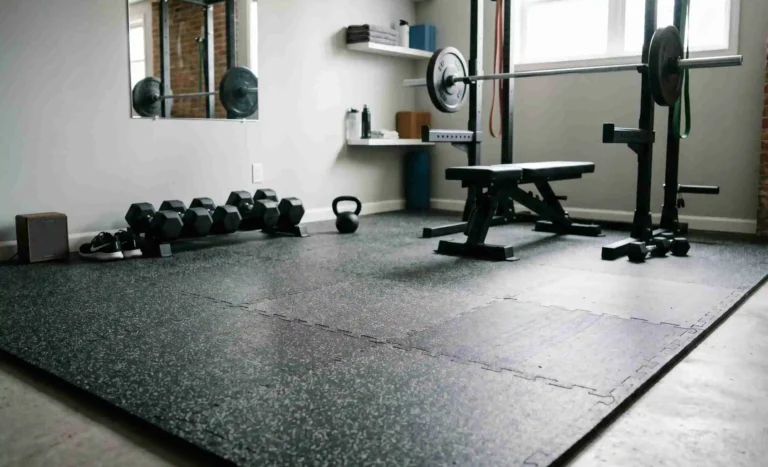
A plate tree needs a flat, level surface and about 4 feet by 2 feet of floor — more with walking clearance factored in. Concrete garage floors are ideal, but even a sealed basement slab works if you mat it properly. Ceiling height matters less here than with racks; most trees top out around 40 inches. If your home gym sits in a finished space, ventilation helps keep the iron plates from picking up surface rust during humid months. A simple dehumidifier and a basic home gym flooring setup handle 90% of environmental issues.
Troubleshooting (If / Then)
- If the tree wobbles when lightly loaded: Check that all plates aren’t stacked on one side. Redistribute weight across posts.
- If plates scuff against each other: The posts may be too close together. Slide a thin foam washer between plates or swap to a tree with wider post spacing.
- If the base feels loose on concrete: Slide rubber matting underneath. Don’t bolt to concrete unless absolutely necessary.
- If plates don’t slide on smoothly: The post may have a burr or chipped powder coating. A light sanding and touch-up paint fix it.
- If you hear squeaking: Bolted bases need a quarter-turn tightening every few months.
Expert Take
The American Council on Exercise emphasizes that organized training environments reduce injury risk — a stray plate on a garage floor is one of the most common home gym trip hazards. Investing in proper plate storage isn’t vanity; it’s a safety upgrade. Similarly, the National Strength and Conditioning Association recommends structured, consistent setups for compound lifts, where quick plate changes between working sets matter. A good tree keeps you moving through drop sets and rest-pause work without fumbling through a pile. If you’re also still dialing in your barbell and rack setup, a solid tree pairs naturally with the rest of a well-planned home gym essentials list.
For most home gym owners, the difference between a “good enough” tree and a poor one shows up in year three, not week one. Cheap welds sag. Thin steel bows. The CAP A-Frame sits at the sweet spot where durability meets realistic pricing — the kind of purchase you forget you made because it just works. If you want to go further, building around a proper squat rack and barbell combo elevates the whole room.
FAQs
How much weight can a budget plate tree hold?
Most budget olympic plate trees hold 400–500 lb total, spread across six posts. Commercial-grade trees handle 700–1,000 lb. Always check per-post capacity, not just total — one overloaded post can bend even a high-rated tree.
Do I need to bolt my plate tree to the floor?
No. A-frame and wide-base trees are stable enough without bolting, especially on a rubber mat. Bolt only if you live in an earthquake zone or train with extreme dynamic movements near the tree.
What’s the difference between a 1-inch and 2-inch plate tree?
A 2-inch tree fits standard olympic plates (the plates with a 2-inch center hole). A 1-inch tree is for older-style standard plates. Olympic is the modern standard for serious lifting, so almost every home gym needs a 2-inch tree.
How many posts do I really need?
Six posts covers most plate collections (45s, 35s, 25s, 10s, 5s, and change plates on their own posts). If you only own 45s and 25s, four posts is fine. More than six is usually overkill for a home gym.
Can a plate tree hold bumper plates?
Yes. Bumpers take up more space per plate (they’re thicker), so check post length. A 16-inch post holds roughly 4–5 bumper 45s. Thin competition bumpers fit more per post than training bumpers.
Will a budget tree rust in a garage?
Powder-coated steel resists rust well, but prolonged humidity and salt air can cause surface corrosion. A basic dehumidifier and occasional light oiling of exposed metal keeps any tree — budget or premium — looking new.
How much floor space does a plate tree need?
A typical six-post tree occupies around 24 x 24 inches of floor. Add 18–24 inches of walking clearance on the loading side. Total working footprint: roughly 4 feet by 2 feet.
Is it worth getting a tree with a built-in barbell holder?
If you own more than one barbell, yes. If you own one bar that lives on your rack, probably not. Standalone bar holders are cheap and more flexible than integrated designs.
How do I stop plates from scratching on the posts?
Load slowly and don’t slam plates down. A thin rubber washer at the base of each post absorbs landing impact and extends the tree’s cosmetic life.
Can I assemble a plate tree myself?
Yes. Most trees ship mostly pre-welded with just a base or a few cross-braces to bolt. Budget 20–30 minutes with a basic wrench set. No special tools needed.
Conclusion
A dedicated olympic weight plate tree is one of those upgrades you don’t appreciate until you have one — and then you wonder how you ever trained without it. For most home gym owners, the CAP A-Frame is the smartest buy: stable, honest spec sheet, and a price that leaves room in the budget for actual plates. If you’ve outgrown entry-level gear or you’re running a serious barbell collection, the XMark Commercial is the step up worth making. Either way, get your plates off the floor, protect your shins, and make every session start faster. Ready to clean up that gym floor?
CHECK PRICE ON AMAZON: https://amzn.to/4tSP35k